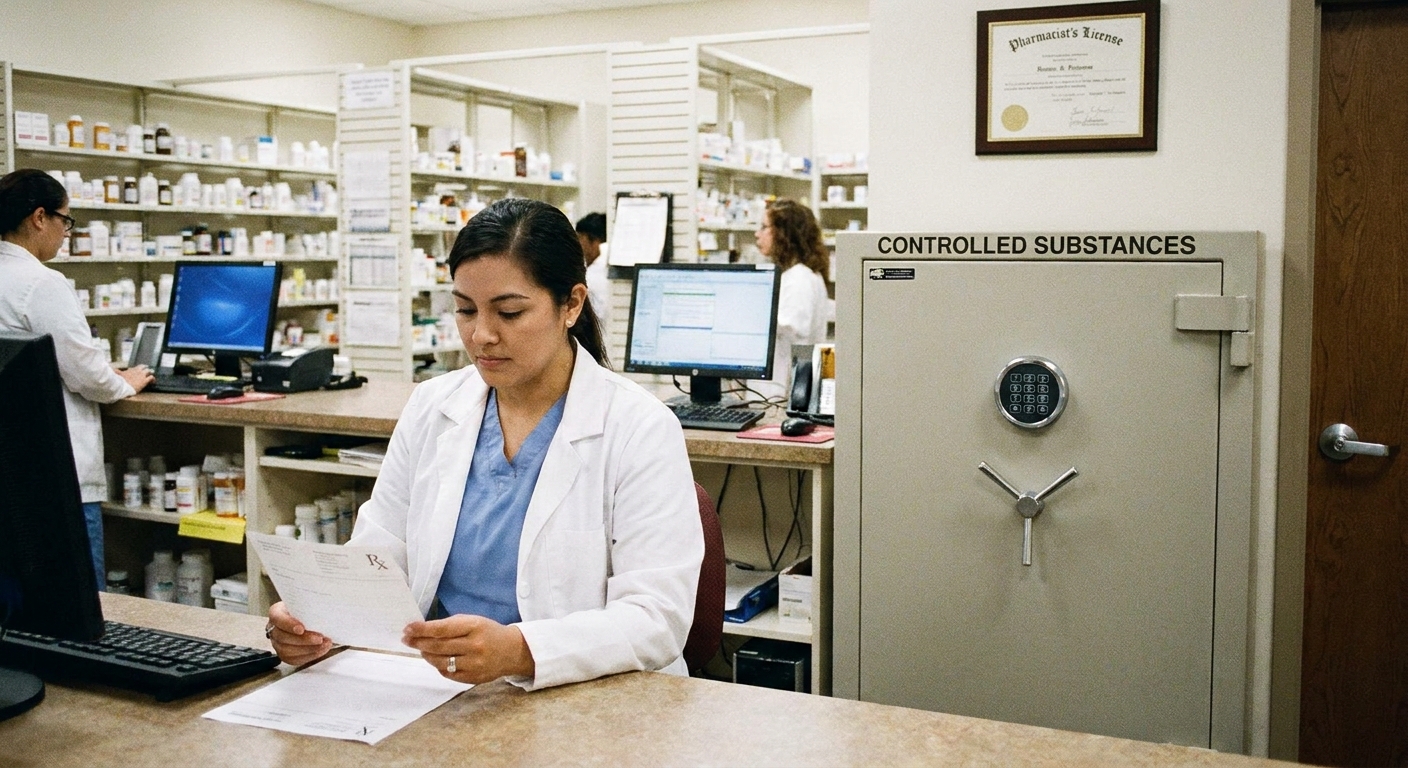

I spent over a decade at the front counter in busy community pharmacies watching two kinds of techs emerge. The first group got very good at the job and stayed there. The second group kept asking “what’s next?” They were the ones who volunteered for inventory projects, asked the pharmacists why a switch happened, and quietly started looking up prerequisites during lunch breaks.
If you are a certified pharmacy technician and you are thinking about becoming a pharmacist, you are not behind. You are actually starting with a practical advantage: you already understand workflow, insurance headaches, patient behavior, and what “a normal Tuesday” in pharmacy really looks like.
This guide walks you through the real steps to go from pharmacy tech to pharmacist, what to do in what order, and how to build a timeline that fits work and life.
The big picture
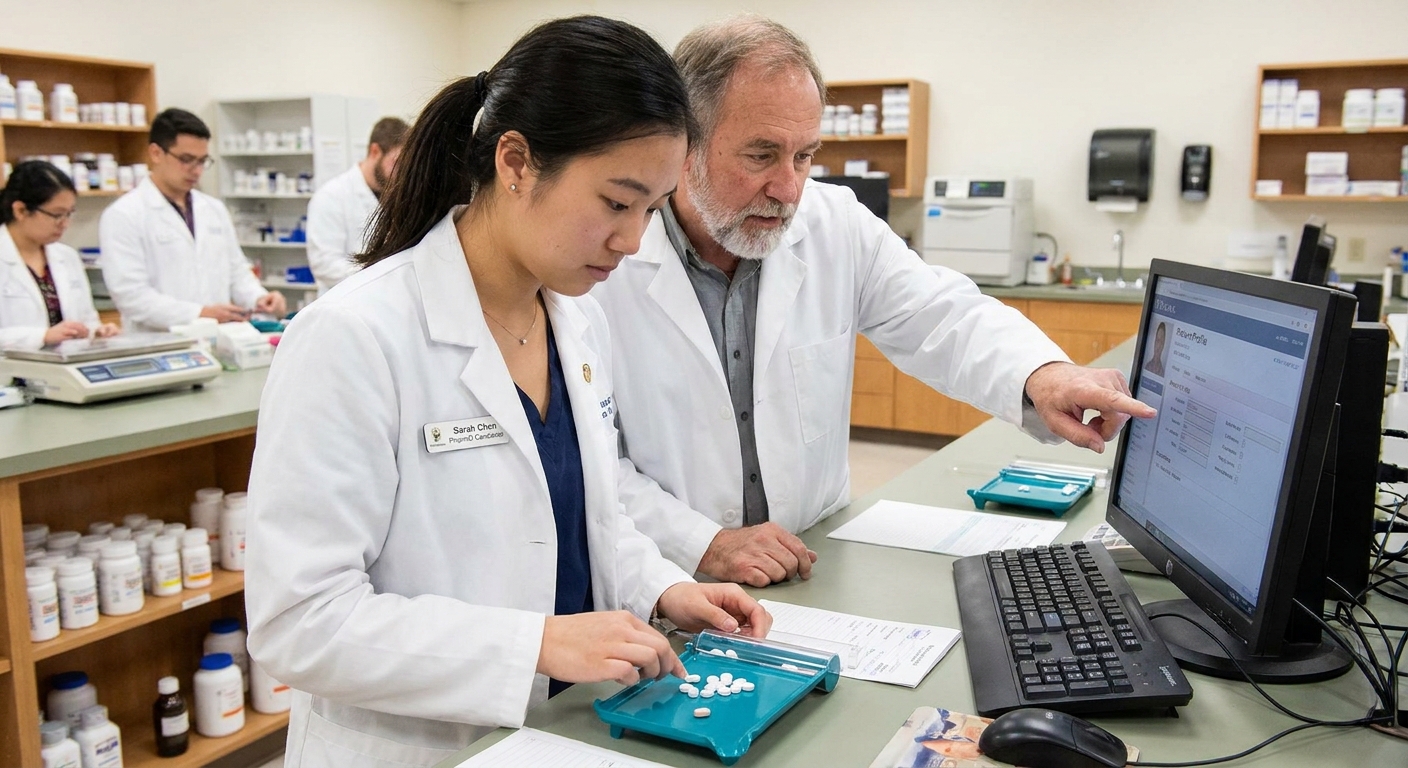
As a technician, you support the medication-use process. As a pharmacist, you are legally responsible for clinical decision-making and, in most settings, the final verification and counseling. That shift affects everything: education length, liability, board oversight, and daily expectations.
- Education: commonly 2 or more years of prerequisite college coursework (varies by school), then a PharmD program that is usually 4 years. A smaller number of programs offer 3-year accelerated, year-round PharmD tracks.
- Licensure: you must pass pharmacist licensing exams and meet state board requirements.
- Work scope: clinical evaluation, patient counseling, immunizations (where permitted), therapy recommendations, and legal accountability. Scope of practice details vary by state and setting.
- Career options: community, hospital, ambulatory care, long-term care, oncology, informatics, industry, managed care, and more.
Step 1: Confirm the job
Before you invest years and serious money, pressure test the idea with real exposure.
Do a focused shadowing plan
- Shadow a pharmacist in your current setting (retail, hospital, long-term care) and ask to observe counseling, problem calls, DUR conversations, and prescriber outreach.
- Ask to shadow in at least one setting that is different from your current job. A hospital shift looks and feels nothing like a high-volume retail day.
Ask yourself the unglamorous questions
- Do you like resolving therapy problems more than filling tasks?
- Are you comfortable being the final “yes or no” on safety?
- Do you want a role that can involve conflict and firm boundaries with prescribers and patients?
If you are unsure, I recommend you also read our broader career overview at Healthcare Careers to compare pharmacy with other allied health paths.
Step 2: Choose a pathway
Most technicians reach the PharmD through one of these routes. The right choice depends on your current credits, finances, and how quickly you need to keep earning.
Pathway A: Prereqs first, then PharmD
This is the most common approach and often the most affordable.
- Best for: techs with few college credits, or those who want to keep working while completing prereqs.
- Pros: cost control, flexible scheduling, time to build GPA and experiences.
- Cons: can take longer if you are going part time.
Pathway B: Bachelor’s degree, then PharmD
Some students prefer completing a full bachelor’s degree (biology, chemistry, public health, etc.) before applying.
- Best for: students who want a broader academic foundation or a backup credential.
- Pros: can strengthen maturity and research experience.
- Cons: often longer and more expensive than prereqs-only.
Pathway C: 0 to 6 and early assurance
Some schools offer 0 to 6 programs (direct entry from high school) or early assurance routes (often for students early in college). If you are already working as a tech and are past that entry point, these may not be a fit, but they are still worth asking about if you are early in your college timeline.
Important: program prerequisites vary. Do not assume one school’s checklist is universal.

Step 3: Finish prerequisites
Work experience helps your application, but it does not replace required college science courses. Most PharmD programs require a set of prerequisites similar to the list below, but schools vary, so treat this as a starting point.
Common PharmD prerequisites
- General biology (often with lab)
- General chemistry (with lab)
- Organic chemistry (with lab)
- Microbiology
- Anatomy and physiology (required by some programs, not all)
- Biochemistry (commonly required or strongly recommended)
- Statistics (commonly required) and sometimes calculus
- English composition and communication (some schools specifically want public speaking)
- Psychology and sometimes sociology
- Humanities and social science electives (some schools include economics)
If pharmacy math has ever been a stress point for you, build that foundation early. I put together a straightforward, technician-friendly walkthrough here: Pharmacy Math and Conversions.
GPA reality check
PharmD admissions are competitive, and science GPA matters. The advantage you have as a tech is motivation and context. Use it by studying prerequisites like they are job-critical skills, not general education boxes to check.
- Take fewer heavy lab sciences at once if you are working full time.
- Build relationships with instructors early. You will need strong letters of recommendation.
- Track your science GPA separately from your overall GPA.
Step 4: Build your portfolio
This is where technicians can stand out, because you already have real pharmacy hours. The goal is to translate “I worked in a pharmacy” into evidence of readiness for professional school.
Experiences that typically help
- Pharmacy experience: community, hospital, compounding, long-term care, specialty.
- Leadership: training new hires, leading inventory counts, serving as a shift lead.
- Community service: health fairs, food banks, patient support work.
- Research exposure: not required everywhere, but helpful if available.
- Strong references: pharmacists who can describe your judgment, ethics, and communication.
How to use tech experience in essays and interviews
If you want your application to sound like a future pharmacist, anchor your stories around professional behaviors, not tasks. These are the story types that usually land well:
- A medication safety catch where you escalated the concern the right way
- A communication win where you de-escalated a tense patient situation
- An insurance barrier you helped untangle while keeping the patient informed
- A controlled substance procedure you followed carefully, and why it mattered
For interview prep, keep it practical and structured. Our interview guide is built for healthcare roles: Job Interview Tips.
Step 5: Apply to PharmD programs
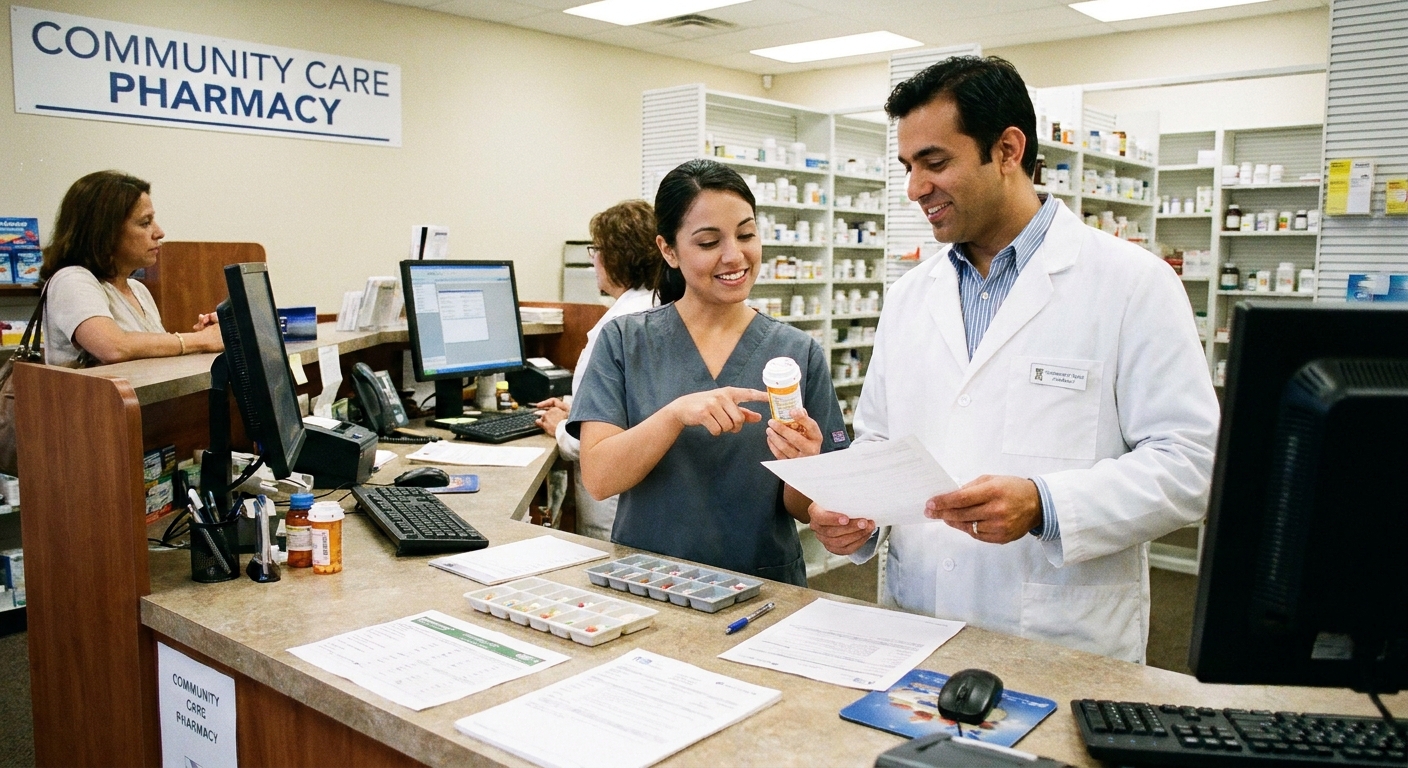
Application requirements vary, but most PharmD programs look at some combination of prerequisites, GPA, letters, essays, interview performance, and healthcare exposure.
One quick PCAT note
Some schools used to require the PCAT. Many no longer do. Do not assume either way, just check each program’s current requirements.
What to compare between programs
- Total cost: tuition, fees, and living expenses where the school is located
- Schedule format: traditional vs accelerated, and how that affects your ability to work
- Rotation sites: quality and variety of experiential placements
- Board exam pass rates: a useful signal of academic support
- Match with your goals: community focus vs research vs clinically heavy pathways
Residency and fellowship, briefly
You do not need a residency to become a licensed pharmacist, but some clinical roles are much easier to reach with one. If you are thinking ambulatory care, critical care, or similar tracks, ask schools about residency placement support. If you are thinking industry, fellowships can matter.
Two common mistakes I see
- Applying without a budget plan: pharmacy school debt is real. Decide what monthly payment you can live with before you commit.
- Waiting too long to ask for letters: give your recommenders time and context. Provide your resume and a short list of examples they can mention.
For official accreditation standards in the United States, you can confirm a program’s status through ACPE: https://www.acpe-accredit.org/.
Step 6: Get through school
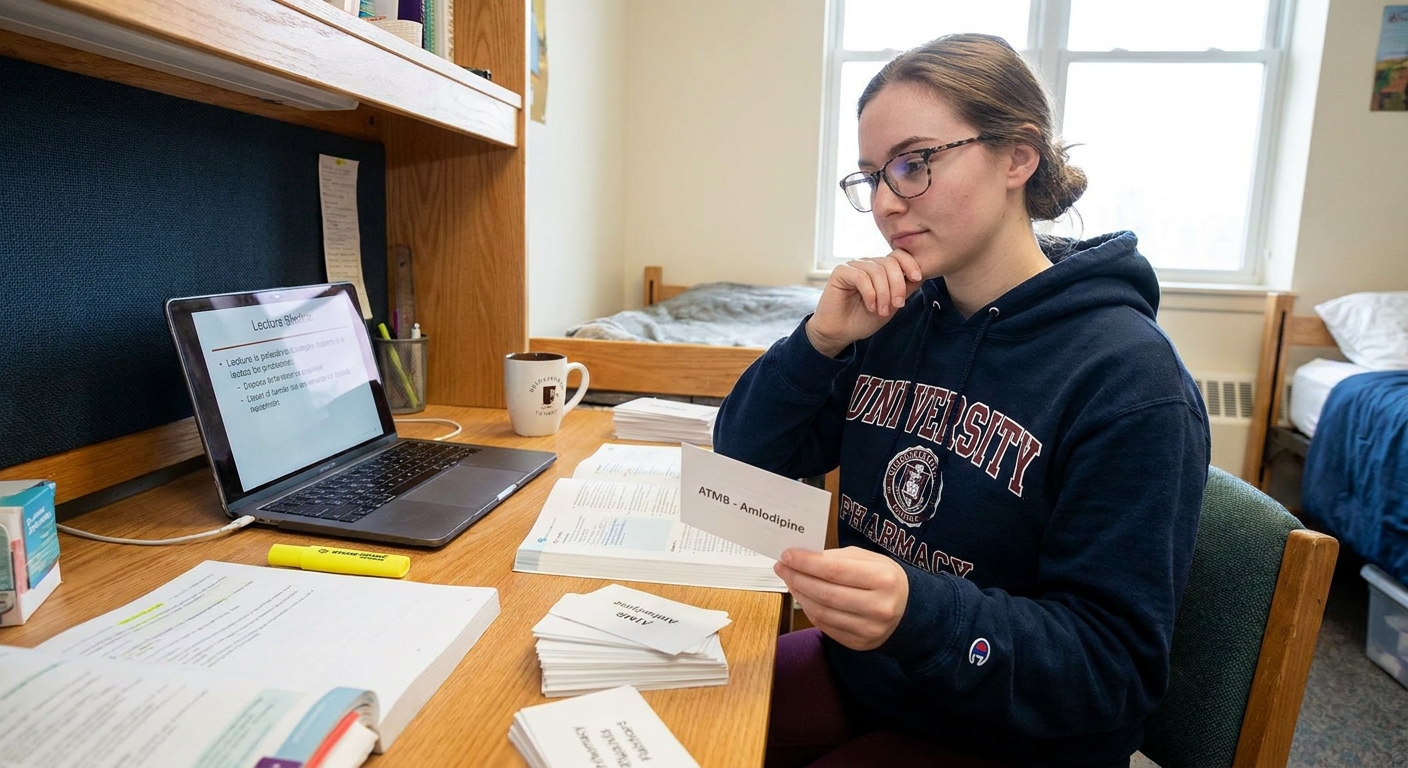
PharmD programs are intense because they combine science, clinical reasoning, communication, and a lot of memorization. The technicians who do well are usually the ones who treat studying like a workflow.
A study system that translates well
- Standardize your inputs: one calendar, one task list, one place for notes.
- Batch your review: quick daily recall, deeper weekly review, and a monthly cumulative reset.
- Use spaced repetition: especially for drugs, indications, side effects, and interactions.
That monthly reset does not need to be complicated. Once a month, re-test yourself on prior units and make a short “miss list” of what you forgot, then review only that list for a week.
If you want a clean way to organize your materials, start with: Organise Pharmacy Tech Exam Study Sources. It is written for tech students, but the organization principles hold up for PharmD coursework.
Do not neglect drug memory early
The faster you can recall core drug classes and common brand and generic names, the easier everything else becomes. Even as a future pharmacist, the foundation is still fluency.
Use our drill list as a starting point: Memorize the Top 200 Drugs.
Step 7: Licensing overview
After earning your PharmD, you will pursue pharmacist licensure through your state board of pharmacy. Requirements vary by state, so always confirm your exact steps with your state board.
What licensure commonly involves
- Graduating from an accredited PharmD program
- Passing required pharmacist licensing examinations, often NAPLEX and MPJE (or a state law exam)
- Completing practical experience requirements, often satisfied through school-supervised experiences, plus any state-specific intern hour documentation
- Background checks and application paperwork through your state board
Even as a student, the law and ethics side matters. If you want a refresher that is written in plain language, see: Pharmacy Law and Ethics: What You Must Know to Pass.
For U.S. exam and licensure pathways, NABP is the central reference point: https://nabp.pharmacy/.
A realistic timeline
Your timeline depends on how many prerequisite credits you already have and whether you can study full time.
| Stage | Typical duration | Notes for working techs |
|---|---|---|
| Prerequisite coursework | 2 or more years | Part-time study often stretches this, but can reduce debt |
| PharmD program | Usually 4 years (some 3-year accelerated options) | Expect heavy course loads and rotations, work hours may need to drop |
| Licensure process | Weeks to months | State processing times and exam scheduling vary |
Example 1: Tech with no college credits, working full time
- Years 1 to 3: prereqs part time
- Years 4 to 7: PharmD full time
- Year 7: licensure exams and onboarding
Example 2: Certified tech with 60 college credits already
- Years 1 to 2: finish remaining prereqs and apply
- Years 3 to 6: PharmD
- Year 6: licensure
Money and workload
Most technicians can handle the academics if they are organized. The harder part is usually time and financial pressure.
Where the stress spikes
- Organic chemistry and heavy lab terms: schedule fewer extra responsibilities.
- Application season: essays, interviews, and requests for references stack up quickly.
- Clinical rotations: your schedule may look like a job, leaving less time for paid work.
Practical ways to reduce financial risk
- Choose prereqs strategically to avoid retakes and protect GPA.
- Compare total cost of attendance, not just tuition.
- Talk to pharmacists you trust about local job markets and realistic pay in the settings you want.
30-day action plan
If you want momentum without overwhelm, here is a clean month-one plan.
- Week 1: List 3 PharmD programs you could realistically attend based on location and budget. Write down their prerequisite lists and deadlines.
- Week 2: Pull your transcripts and identify which prereqs you have, which you need, and which need lab components.
- Week 3: Ask one pharmacist mentor if they are willing to be a reference later, and ask what they think you should improve before applying.
- Week 4: Register for next term classes and set a weekly study schedule you can keep even on bad weeks.
FAQ
Do I have to be certified as a pharmacy technician first?
No. PharmD programs do not require technician certification as a rule, but technician experience can strengthen your application and help you confirm the career fit. If you are still working toward certification, start here: Pharmacy Tech Exam and PTCB vs ExCPT.
Can I work as a tech while in pharmacy school?
Many students do at least part time early on, but most need flexibility, especially during lab-heavy terms and rotations. The trick is finding an employer who will work with your schedule and not punish you for exam weeks.
Will my technician experience count as rotation hours?
Usually no. Experiential requirements in PharmD programs are structured and supervised under school standards. Your tech background still helps you perform well, but it typically does not replace required rotations.
Is pharmacy school worth it financially?
It depends on your debt load, your target practice setting, and your local job market. Treat this like a long-term budget decision, not just a passion decision. Talk to pharmacists in the roles you want and compare cost of attendance carefully.