


Why interviewers ask ethical and legal scenario questions
In busy community pharmacies, the most stressful moments are rarely about counting pills. They are about protecting patient privacy, preventing harm, and knowing exactly when to stop, escalate, and document. That is why hiring managers love scenario questions about HIPAA, suspected diversion, and patient conflict.
I used to train new counter staff, and I saw the same pattern: people tried to be “helpful” fast, but accidentally stepped over policy. In an interview, your goal is to show you can be helpful without improvising outside policy. Think of your answer as a safety checklist: protect the patient, follow the law and store policy, involve the pharmacist, and document appropriately.
One quick mindset shift that helps: a lot of scenarios have a “right direction” but the exact steps can still vary by state law and company policy. If you keep your answers grounded in verification, scope, and escalation, you will sound safe anywhere.
If you want to refresh the baseline expectations interviewers assume you know, start with pharmacy law and ethics. Even though that guide is written with exam prep in mind, the same principles show up in interviews.
The compliance-first answer formula
When you get a scenario question, do not rush to the punchline. Use a simple structure that shows judgment, not just instincts.
1) Pause and clarify the facts
- Who is asking?
- What exactly are they requesting?
- Is the patient present, and can identity be verified?
- Is this an urgent safety issue?
2) Protect privacy and safety immediately
- Move the conversation away from other customers.
- Stop the process if something feels unsafe or noncompliant.
- Do not disclose protected health information to unauthorized people.
3) Follow scope and escalate correctly
- State what you can do as a technician, per state law and company policy.
- Bring the pharmacist in for clinical judgment, legal refusals, controlled substance concerns, or anything involving suspected fraud or diversion.
- If it involves staff misconduct, follow the chain of command and reporting policy.
4) Document per policy
- Document only in the approved system or log your workplace uses.
- Keep documentation factual, minimal, and professional.
5) Offer a respectful next step
- What can you do for the patient right now that stays compliant?
- Who can they speak with?
- When will you follow up?
This structure pairs really well with the STAR format. If you need a refresher, see STAR method for pharmacy tech interviews.
Scenario: A friend asks what medication their spouse is picking up
This is a classic privacy scenario. Interviewers are watching for two things: identity and authorization verification and appropriate disclosure.
It helps to say it plainly: the spouse might be authorized, or they might not. Your job is not to guess. Your job is to follow the verification process and share information only when it is appropriate to do so.
A strong interview-style answer
“I would not confirm anything about a patient’s prescriptions unless I can verify the person is authorized to receive that information. I would keep the interaction polite, explain that I cannot discuss a patient profile without verification, and offer options like having the patient contact us directly or using whatever authorization process our pharmacy uses. If the person becomes upset or insists, I would involve the pharmacist or my manager and follow store policy.”
What not to say
- “I would just tell them if they seem trustworthy.”
- “I would look it up quickly and see what’s ready.”
- “I would give them a hint without saying the drug name.”
Even “hints” can be a disclosure. A good rule is: if you would not say it loudly in a crowded waiting area, it probably should not be said at all.
For patient-facing communication habits that keep you out of trouble, I also recommend these essential soft skills for pharmacy technicians.
Scenario: “Is it ready?” and will-call pickup questions
This is where good techs quietly prevent a lot of privacy mistakes. People will ask “Is my spouse’s prescription ready?” or even “Do you have anything ready for John Smith?” and it sounds harmless until you realize you might be confirming that someone is a patient at your pharmacy.
A strong interview-style answer
“I would follow our pickup and verification process before confirming details. I would verify identity first, and then share only what is appropriate for that person to receive. If I cannot verify authorization, I would keep it general and offer to have the patient contact us directly or come in with ID, depending on policy.”
Small details interviewers love
- Use the pharmacy’s standard identifiers (for example, DOB or address) and do not bend them because the line is long.
- Avoid confirming a full medication name at the counter unless the person is verified and it is appropriate.
- If you feel pressured, pause and involve the pharmacist.
Scenario: A patient asks you to discuss their meds where others can hear
This is a subtle one because the patient is requesting the conversation, but you still need to prevent accidental disclosures to others nearby.
A strong interview-style answer
“I would invite the patient to step to a private counseling area or a quieter part of the counter. I would keep my voice low and share only what is necessary for the task. If the question turns clinical, like side effects or interactions, I would bring in the pharmacist for counseling.”
Extra points: show awareness of environment
- Angle your screen away from customer view.
- Avoid repeating full names, dates of birth, or medication details loudly.
- Use the pharmacy’s established counseling workflow.
Scenario: Speakerphone, recording, or social media
This comes up more than people think: someone puts a call on speaker so a third person can hear, or they start recording at the counter. The pressure is real because you want to keep the interaction calm, but you also cannot let the situation pull you into a privacy issue.
A strong interview-style answer
“I would keep my voice low and ask to move to a more private area. If a third party is on speakerphone or present, I would confirm the patient is okay discussing their information with them, and I would still keep the details limited to what is necessary. If someone is recording and it creates a privacy concern for other patients or staff, I would follow store policy and involve the pharmacist or manager.”
Scenario: You suspect drug diversion
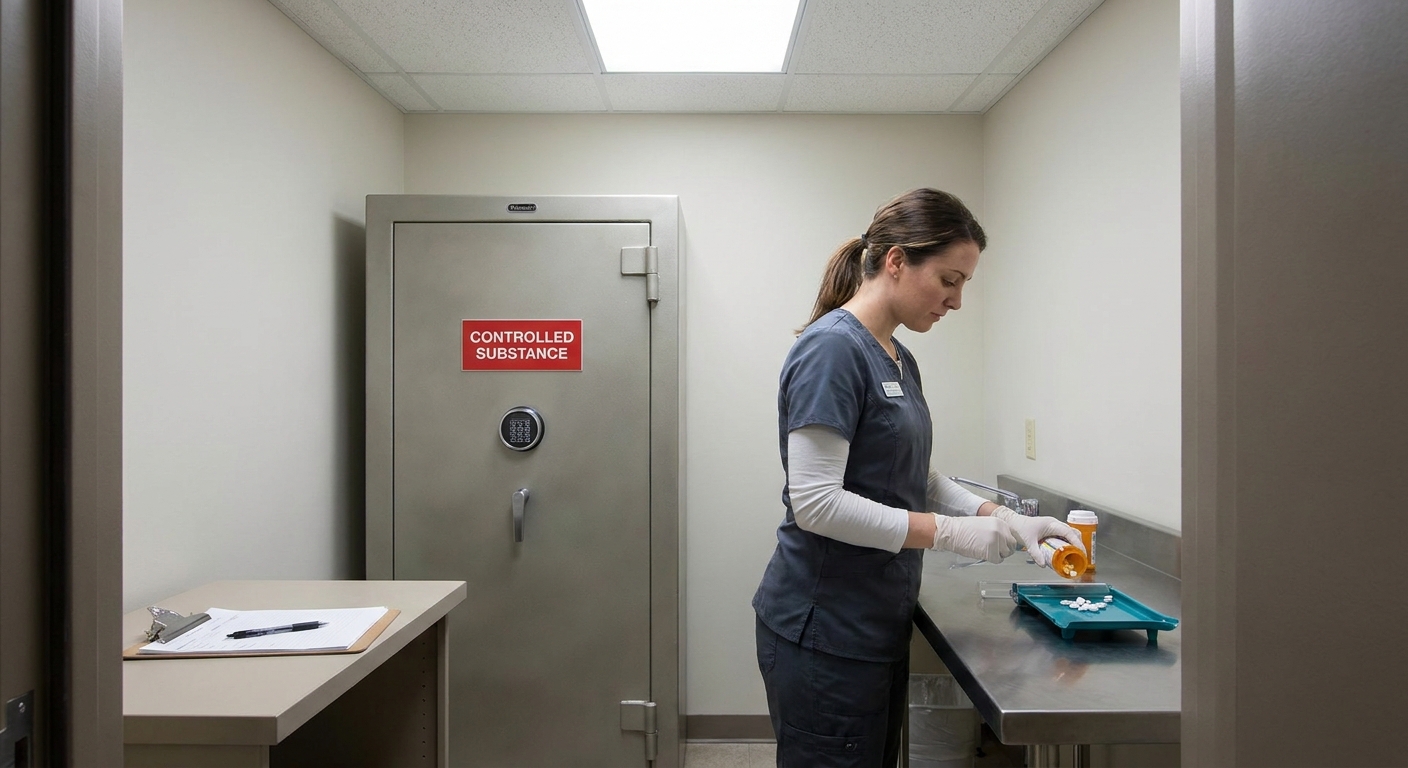
Interviewers ask diversion scenarios because they reveal your integrity under pressure. Your best move is calm, factual escalation. Do not play detective, and do not accuse.
If you suspect a customer is diverting
Examples: signs of a forged or altered prescription, altered quantities, repeated early refill requests, “lost” meds patterns, or someone pressuring staff to bypass steps.
A strong interview-style answer: “I would follow our verification steps and not override safeguards. If anything seems suspicious or I notice inconsistencies, I would stop and involve the pharmacist immediately. I would document the concern in the approved system per policy and let the pharmacist decide the next steps, such as contacting the prescriber or refusing to fill.”
If you suspect a coworker is diverting
This is the one people get wrong by trying to confront the coworker directly.
A strong interview-style answer: “I would not confront them on the spot or make accusations. I would secure the process I am responsible for and report my concern promptly through the proper chain of command, typically the pharmacist-in-charge or manager, following company policy. I would document only through approved reporting channels, and only what is necessary.”
Language that sounds mature and safe
- “objective observations”
- “follow chain of command”
- “involve the pharmacist”
- “protect patient safety and comply with policy”
If the scenario includes an immediate threat, robbery, or violence, follow emergency procedures per policy, which can include calling 911. Otherwise, interviewers usually want to hear that you understand internal reporting and pharmacist authority.
Scenario: A patient becomes angry and demands an override
In retail, this can be about insurance rejections, controlled substance rules, ID requirements, or an expected ready time that is not realistic. The ethical trap is making promises you cannot keep, or breaking policy to de-escalate.
A strong interview-style answer
“I would stay calm, keep my voice respectful, and move the conversation away from the line if possible. I would acknowledge their frustration and then explain what I can do within policy, like checking the rejection message, offering to contact the insurer or prescriber, or giving an accurate timeframe. If they continue escalating or request something I cannot legally do, I would involve the pharmacist or manager.”
What interviewers listen for
- You can de-escalate without arguing.
- You do not blame other staff.
- You do not promise an outcome you cannot control.
- You escalate early enough to prevent a scene.
If you want more practice with how managers evaluate answers, see top pharmacy technician interview questions and how to answer them.
Scenario: You catch a possible medication error in progress

This one is less about “being right” and more about stopping the line and preventing harm. Even if you are not 100 percent sure, you escalate.
A strong interview-style answer
“I would pause the process immediately and bring the pharmacist in to verify. I would not dispense or hand anything out until the pharmacist confirms the correct drug, strength, and directions. If it involves a labeling or selection issue, I would help pull the original stock bottle and any paperwork to support the check, and then follow the pharmacy’s error reporting process.”
If you want a deeper safety mindset for scenarios like this, you will like medication error prevention strategies and LASA medications and mix-up prevention.
Scenario: Someone offers you money or a gift to “speed it up”
This is an ethics and compliance question, and it is also a professionalism question. You want to communicate two ideas: you cannot be bought, and you will still treat them respectfully.
A strong interview-style answer
“I would decline and explain that we process prescriptions based on workflow and patient need, not tips. I would continue to help them within our normal process, and if I felt the offer was intended to influence controlled substances or bypass rules, I would notify the pharmacist and document according to policy.”
Quick phrases you can use
- “I’d want to verify identity and authorization before discussing any patient information.”
- “I can help with the process side, and I would bring the pharmacist in for anything clinical or a refusal decision.”
- “If I’m uncertain, I pause and escalate rather than guessing.”
- “I would follow policy and document factually in the approved system.”
- “My priority is patient safety, privacy, and compliance.”
Common mistakes that tank scenario answers
1) Playing hero
Trying to solve everything yourself can read as risky. In pharmacy, safe escalation is a skill.
2) Over-sharing HIPAA details
You do not need to quote regulations. You need to show you know how to behave: verify, minimize, protect, and involve the pharmacist.
3) Confronting suspected diversion directly
It can escalate, and it can compromise an investigation. Report through the correct channel.
4) Making promises to calm an angry patient
Overpromising creates bigger problems later. Give realistic timeframes and compliant options.
5) Forgetting the setting
Privacy is not just a rule, it is a physical environment problem: lines, voices, screens, will-call bins, and who is within earshot.
Practice: 8 mini-prompts
- A parent asks for details about their adult child’s prescription “because I’m the one paying.”
- A prescriber’s office calls and asks you to read back a patient’s entire medication list.
- A patient asks you to go on speakerphone with their friend and explain what the medication is for.
- You see another tech leave a patient leaflet with name and address on the counter.
- A customer tries to photograph the computer screen while you are typing.
- A patient demands you refill a controlled medication early because they are going out of town.
- A clinic calls asking for a transfer or fill history, but you cannot verify who you are speaking to.
- You notice a count discrepancy on a controlled substance after a busy rush.
As you practice, keep returning to the same backbone: clarify, protect, escalate, document in the approved system, and offer the next compliant step.