

I have hired and trained in busy community pharmacies long enough to recognize a pattern: most pharmacy technician candidates do not struggle because they lack potential. They struggle because they prepare for the wrong environment. A hospital interview is usually built around systems, safety, and teamwork across departments. A retail interview is built around pace, customer pressure, and accuracy with constant interruptions.
This guide breaks down what is actually different, what employers are listening for, and how to prepare without sounding like you memorized a script.

Hospital vs. retail: what the interview tests
Both settings care about safety and accuracy. The difference is which risks they see most often, and which workflows you will touch on day one.
| Interview focus | Retail pharmacy (outpatient) | Hospital pharmacy (inpatient) |
|---|---|---|
| Primary risk | Wrong patient, wrong insurance, missed or incorrect counseling handoff, rushed filling | Wrong dose/route/time, compounding errors, look-alike/sound-alike selection, breakdown in chain of custody |
| What “fast” means | High script volume while answering phones and helping customers | Meeting med delivery times, STAT requests, cart fills, ADC restocks without shortcuts |
| What teamwork looks like | Small team, heavy front counter collaboration | Pharmacists, nurses, unit clerks, couriers, buyers, sterile compounding team, sometimes informatics |
| Systems you will hear about | Third-party claims, DAW codes, eRx, drive-thru workflow | Pyxis/Omnicell (ADC), medication histories, IV room workflow, unit dose, barcoding processes |
| Customer service | Constant and direct | Often indirect (your “customer” is a nurse, a unit, or another department) |
If you want a quick mental shortcut: retail interviews often ask, “Can you keep your cool with the public while staying accurate?” Hospital interviews often ask, “Can you follow a system, document correctly, and avoid freelancing around safety steps?”
What retail interviewers prioritize
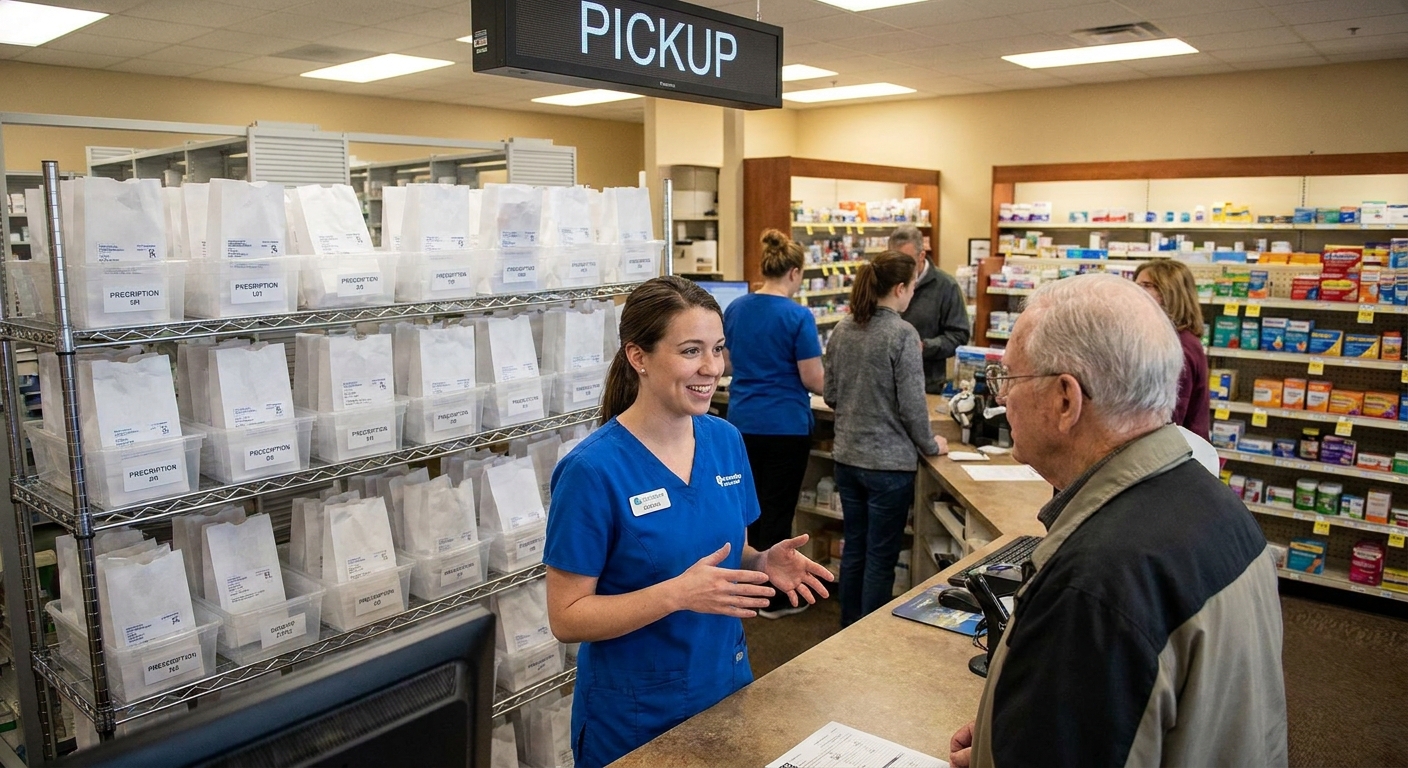
Retail hiring managers are picturing you at the pickup counter during a rush. They are listening for proof that you can communicate clearly, protect privacy, and still get the work done.
Skills retail interviewers look for
- Customer de-escalation: staying calm with angry or stressed patients.
- Accuracy under interruption: restarting tasks without losing your place.
- Strong basics: reading labels, SIGs, and common calculations.
- Insurance and problem-solving: knowing when to troubleshoot vs. escalate.
- Team awareness: jumping between register, phones, fill station, and inventory.
Retail is where “soft skills” become hard requirements. If you want to tighten this up, I recommend reviewing 5 Essential Soft Skills Every Pharmacy Technician Needs before your interview.
Common retail interview questions (and what they mean)
- “Tell me about a time you handled a difficult customer.” They want your tone, your boundaries, and your escalation judgment.
- “How do you stay organized when it is busy?” They want a real system: checklists, staging, and clean handoffs.
- “What would you do if a prescription seems wrong?” They want “pause, verify, ask the pharmacist,” not guessing.
- “How do you protect patient privacy?” They want practical HIPAA behavior at pickup and on the phone.
For more question practice, use Top 15 Pharmacy Technician Interview Questions (and How to Answer Them) as a rehearsal list.
What hospital interviewers prioritize
Hospital interviews are often more structured and scenario-driven. In my experience, they typically place more weight on whether you respect process, document correctly, and communicate well with clinical teams.
Skills hospital interviewers look for
- Process discipline: following SOPs, double checks, and documentation.
- Medication safety mindset: LASA awareness, high-alert caution, and escalation habits.
- Comfort with sterile and non-sterile environments: knowing what you can do and what you must never shortcut.
- Prioritization: STAT vs. routine requests, triaging interruptions appropriately.
- Communication with nurses and units: professional, concise, and documented when needed.
If the role touches compounding, you should review the basics ahead of time: Sterile and Non-Sterile Compounding Study Guide (USP 795, 797, 800).
Common hospital interview questions (and what they mean)
- “Walk me through how you would handle a STAT medication request.” They want safety first, then speed, and clean communication.
- “Describe a time you caught an error.” They want situational awareness plus the courage to speak up.
- “How do you prevent mix-ups between similar drug names?” They want concrete tactics: tall man lettering awareness, barcode checks, bin separation.
- “Have you worked with automated dispensing cabinets?” If you have not, you can still show you understand controlled access and logging.
To sharpen your safety language, it helps to skim LASA Medications: Avoid Mix-Ups. This mindset tends to land well in hospital interviews because it shows you think ahead about failure points.
Common hospital roles
“Hospital pharmacy technician” can mean a few different jobs. When you know which lane the manager is hiring for, your examples get sharper fast.
- Central pharmacy (unit dose and distribution): expect questions on accuracy, prioritization, packaging, and delivery timelines.
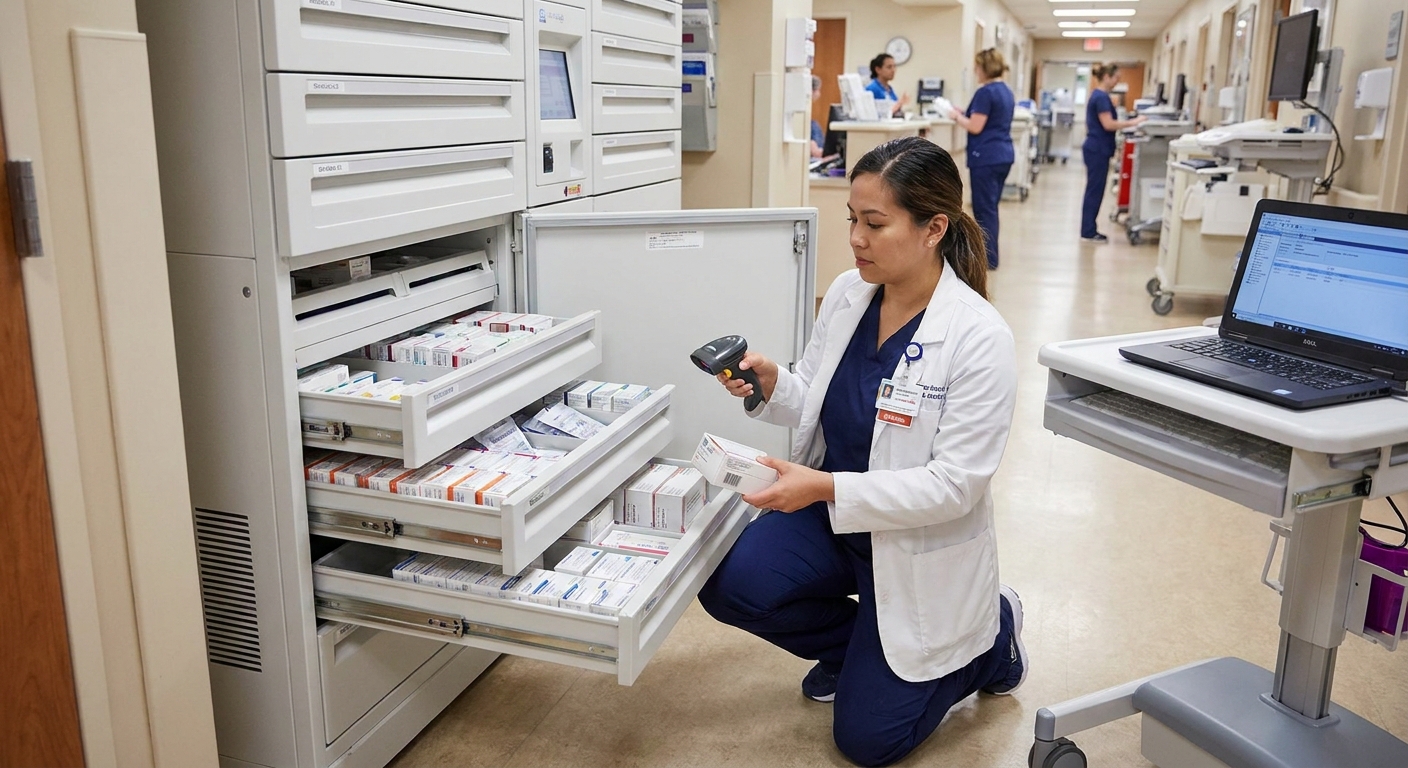
- ADC restocking: expect questions on chain of custody, discrepancy reporting, documentation, and tight controlled-substance habits.
- IV room (sterile compounding): expect questions on aseptic technique basics, garbing, cleaning, and why you never “make it work” when something is off.
- Medication history (med rec support): expect questions on phone skills, precise documentation, and how you verify when a list does not make sense.
- Purchasing and inventory: expect questions on par levels, recalls, expiration management, and how you keep records clean.
If you want a quick refresher on inventory language that comes up in both settings, review Pharmacy Inventory and Supply Chain Concepts for Exam Day.
Scenarios to rehearse
You do not need perfect answers. You need a repeatable structure. I coach candidates to use a simple four-step flow that works in both settings: Pause, Verify, Communicate, Document.
Retail scenarios to practice
- Insurance rejection at pickup: explain next steps, set expectations, and avoid blaming insurance or the prescriber.
- Patient wants an early refill: check date, controlled status, plan limits, and escalate appropriately.
- Phone call during filling: pause safely, mark your place, resume with a double check.
- Waiter prescription during rush: confirm timeframe, triage, communicate to the team.
For insurance language and common codes, reviewing Third-Party Rejections and DAW Codes will give you confident terminology.
Hospital scenarios to practice
- Unit calls for a missing dose: check dispensing records, delivery logs, and cabinet activity before re-sending.
- Controlled substance discrepancy: do not “fix” it yourself, follow policy and escalate immediately.
- Urgent IV med request: clarify concentration, route, and timing, then follow the correct compounding and labeling workflow.
- High-alert medication handling: explain how you avoid mix-ups and when you require a pharmacist check.
Hospital and retail workflows show up differently, but the safety instincts should sound the same.
How to tailor your examples
Most candidates have experience that can fit either setting. The trick is choosing details that match the job.
If you are interviewing for retail
- Choose stories that show customer communication, time management, and accuracy under pressure.
- Use numbers when you can, but keep them believable for your situation: “I supported pickup and phones during our after-work rush,” “I handled return-to-stock at close,” or “I processed refills while the pharmacist counseled.”
- Emphasize privacy habits and clean handoffs to the pharmacist.
If you are interviewing for hospital
- Choose stories that show process discipline, documentation, and error prevention.
- Translate retail skills into hospital language: inventory counts become chain of custody, phone triage becomes prioritization.
- Show comfort saying, “I do not know, but I know exactly how I would verify.”
Credentials and onboarding
Candidates are sometimes surprised by how much paperwork comes with a hospital job. Not every facility is identical, but hospitals often have more formal onboarding requirements than retail.
- Certification expectations: Some hospitals prefer or require national certification (PTCB or ExCPT), or a timeline to earn it.
- Background checks and access: Expect screening and badge access steps, especially if you handle controlled substances or work on patient units.
- Competencies: IV room work, hazardous drug handling, or even ADC workflows may require training modules and sign-offs before you work independently.
If you are still deciding which exam you are taking (or explaining it in an interview), PTCB vs. ExCPT: Which Pharmacy Technician Exam Should You Take? can help you describe your plan clearly.
What not to say
You can absolutely be honest in an interview. Just avoid phrasing that signals risky habits.
Retail red flags
- “If customers are rude, I will match their energy.”
- “I can multitask, so I just keep filling while I answer the phone.”
- “Insurance is not my job.”
Hospital red flags
- “I move fast, so I do not need checklists.”
- “If something is missing, I just override it to keep things moving.”
- “I will figure it out as I go.”
A safer alternative in both settings is: “If I am interrupted or unsure, I pause, verify, and escalate to the pharmacist when appropriate.”
What to bring and ask
Being prepared is not about showing off. It is about reducing uncertainty for the manager.
Bring (or be ready to discuss)
- Schedule availability including weekends, holidays, and on-call expectations if applicable.
- Certification status and timeline if you are pursuing it. If you are early in the process, see Certification Application Process Step by Step.
- One-page resume and a short list of references if requested. If you are new, use Pharmacy Technician Resume With No Experience to tighten your story.
Smart questions to ask (retail)
- “How do you split responsibilities between pickup, phones, and filling during peak hours?”
- “What does success look like in the first 30 days?”
- “How do pharmacists prefer issues to be escalated at this store?”
Smart questions to ask (hospital)
- “Which technician tasks are most time-sensitive on a typical shift?”
- “Is this role more unit dose, ADC restocking, medication history, or IV room focused?”
- “What training and competency sign-offs are part of onboarding?”
Day-before checklist
- Rehearse 3 stories that show accuracy, teamwork, and handling pressure.
- Pick 2 safety examples: an error you prevented, and how you verify when unsure.
- Review basics: common SIG codes (Pharmacy SIG Codes and Medical Abbreviations) and quick math (Pharmacy Math and Conversions).
- Know your why: why this setting, why this schedule, why now.
- Plan your closing question so you do not freeze at the end.
If you want a broader interview prep hub, start with Job Interview Tips and then drill down into the setting you are targeting.
FAQ
Is a hospital pharmacy interview harder than retail?
It is “harder” in a different direction. Hospital interviews are often more structured and safety-focused. Retail interviews often push harder on communication, multitasking, and staying calm with the public.
What if I have only retail experience but want a hospital job?
That is common. Translate your experience into hospital priorities: show that you follow process, document, verify, and escalate appropriately. If you have handled inventory, controlled counts, or audit logs, bring those examples forward.
Will they test me on math or drug knowledge during the interview?
Some will. Retail managers may ask quick day-to-day questions like days supply or basic conversions. Hospital managers may ask scenario questions that reveal whether you understand dose forms, routes, and safety checks. Reviewing Drug Classifications and Suffixes and the math basics is usually enough.