
When I trained new counter staff in a busy community pharmacy, the biggest early shock was this: patient safety is not a single step. It is a chain. Most real-world errors happen when that chain gets rushed, interrupted, or quietly “patched” instead of fixed.
That is also why the exam loves scenario questions about quality assurance (QA). They are testing whether you can spot where the chain is about to break, and what you do next to prevent harm.
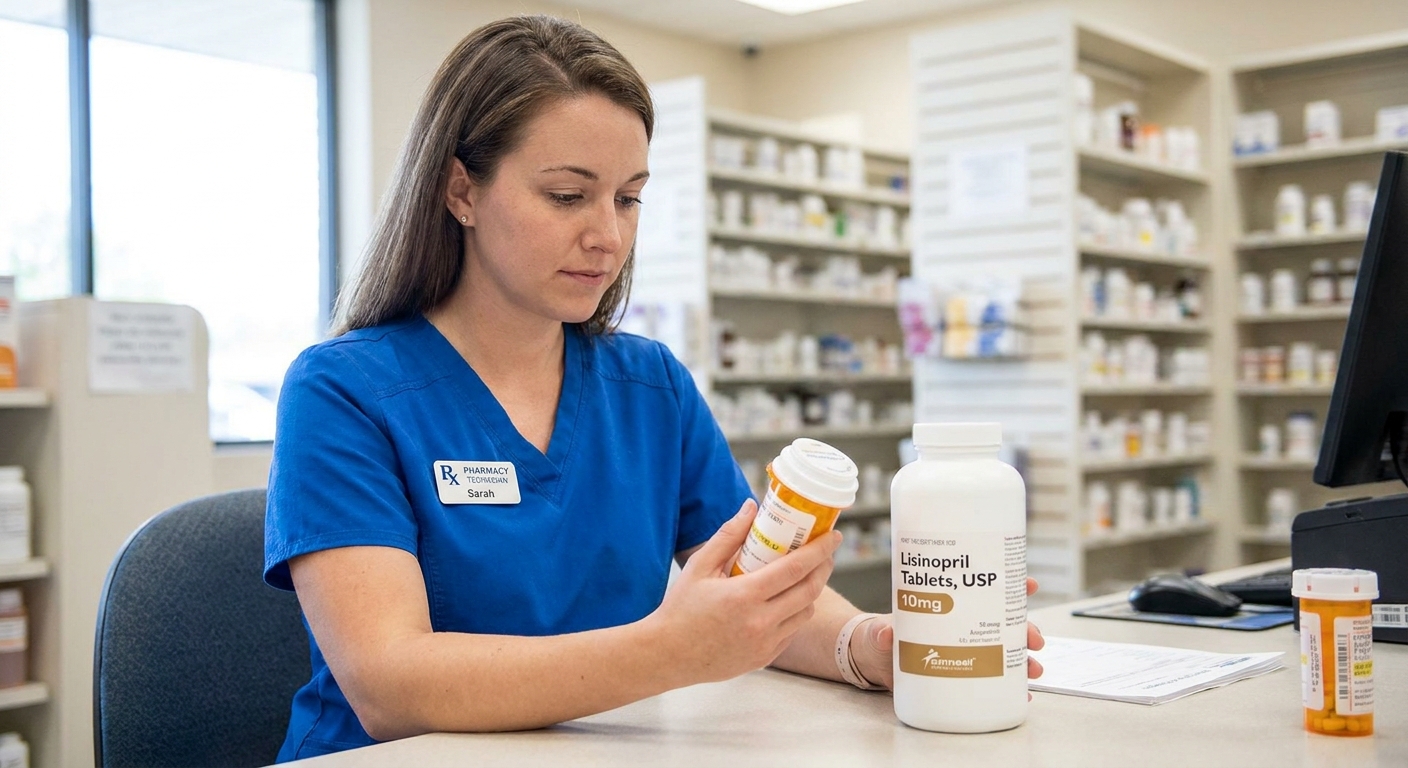
In this guide, I’ll walk you through the patient safety mindset the exam looks for, then we will practice how to answer common scenarios: prescription drop-off, near misses, dispensing problems, and reporting systems.
What QA means on the exam
On pharmacy technician exams, QA is usually framed as: preventing medication errors and responding correctly when risk is identified. You are not being tested on being the final clinical decision maker. You are being tested on whether you can follow safe systems, recognize red flags, and escalate appropriately.
A safe order to think in
- Stop the process if something seems unsafe.
- Separate the questionable item from active workflow (so it is not accidentally used).
- Clarify using the correct channel (pharmacist, prescriber call-back process, patient questions).
- Correct the record and the product (label, NDC, directions, patient profile).
- Document and report according to policy.
If you are unsure between two answer choices, the safer choice is usually the one that slows down, involves the pharmacist, and uses the reporting process.
For a deeper foundation on rules and responsibilities that show up in safety questions, review pharmacy law and ethics.
How to handle scenario questions
Step 1: Identify what kind of event it is
- Near miss: caught before it reaches the patient.
- Medication error: in many exam scenarios, this means the error reached the patient (even if no harm occurred).
- Adverse drug reaction (ADR): a harmful or unintended response at normal doses, not necessarily due to a dispensing mistake.
- Interaction or contraindication concern: often requires pharmacist clinical judgment.
Step 2: Find the highest risk detail
Look for high-alert drugs (insulin, anticoagulants, opioids, concentrated electrolytes), pediatrics, renal dosing, allergies, similar drug names, similar packaging, and unclear directions.
Step 3: Choose the action that prevents harm first
Do not “finish the fill quickly” to fix it later. The correct move is usually to pause and escalate.
Step 4: Match the role to the task
- Techs can gather information, compare NDCs, confirm patient identifiers, and enter data carefully.
- Pharmacists handle clinical appropriateness, therapeutic substitution decisions, required counseling, and final verification where required by law or policy.
Step 5: Add the system fix
The strongest answers often include a prevention step: scanning at fill, tall man lettering, shelf separation, independent double-check, or documenting for trend tracking.
If you want more structured practice using scenarios, pair this guide with hospital vs retail pharmacy exam scenarios.
Drop-off and intake
Drop-off scenarios test whether you can collect the right information, confirm identity, and spot obvious problems before the prescription enters production.
Intake checklist
- Two patient identifiers (commonly full name and date of birth).
- Allergies and what reaction occurred.
- Current medication list (including OTC and supplements when relevant).
- Correct prescriber, date, and legitimacy checks per policy.
- Complete directions (sig), quantity, refills, and strength.
Common intake traps
- Same-name patients: parent and child with similar names, or two patients with identical names.
- Wrong profile selection: “John A Smith” vs “John E Smith.”
- Conflicting directions: “Take 1 tablet daily” but quantity suggests BID.
- Sound-alike prescriber names or wrong clinic location.
Best test-taking move: pause, confirm identifiers, and bring unclear or conflicting directions to the pharmacist for clarification before it moves forward.
For sig decoding that often hides safety issues, review sig codes and medical abbreviations.

Near misses
A near miss is gold for QA because it reveals a system weakness without patient harm. Exams like to see if you treat near misses seriously instead of brushing them off.
Typical near-miss scenarios
- Wrong strength selected, caught at check.
- Label printed for the wrong patient, caught before filling.
- Look-alike package pulled, caught during scan.
- Wrong quantity counted, caught during final count verification.
Near miss response
- Stop and quarantine the wrong item.
- Notify the pharmacist according to workflow.
- Correct the immediate issue (right drug, right patient, right directions).
- Document the near miss in the store or health system reporting tool.
- Apply a prevention step (shelf change, scan compliance, reminder for two identifiers).
Exam tip: If one option says “put it back and move on,” and another says “document in the reporting system,” choose documentation. QA is about learning patterns, not just fixing today’s problem.
LASA errors
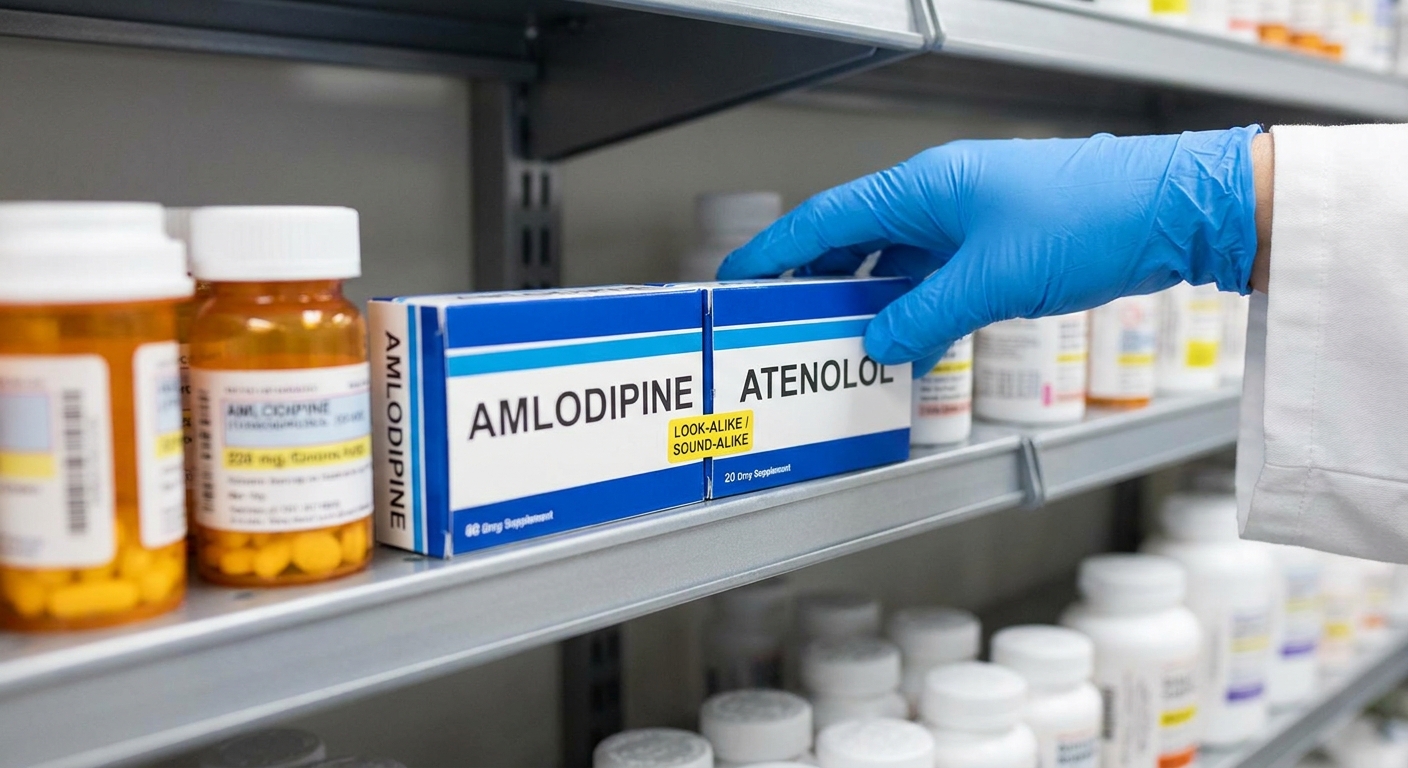
Look-alike, sound-alike (LASA) questions show up a lot because they are realistic and preventable.
Prevention strategies the exam recognizes
- Barcode scanning at key points (product selection and filling).
- Tall man lettering when used in software and shelf labels (for example, predniSONE vs prednisoLONE).
- Shelf separation of commonly confused products.
- NDC match with package size awareness.
- Independent double-check for high-risk fills per policy.
LASA issues often tie back to drug classes and name patterns. If suffixes and stems still feel messy, spend time with drug classifications and suffixes.
High-alert medications
High-alert medications are higher risk because small mistakes can cause big harm.
Examples used in questions
- Insulins (mix-ups between types, units vs mL confusion).
- Anticoagulants (warfarin, heparin, DOACs), dose and interaction concerns.
- Opioids, sedation risk and mix-ups.
- Methotrexate, weekly vs daily dosing confusion.
- Concentrated electrolytes in inpatient settings.
What to do in scenarios
- Slow down and follow the exact verification steps.
- Confirm order details (strength, formulation, directions).
- Escalate unclear dosing or unusually high doses to the pharmacist.
- Use safeguards like scanning and independent double-checks when policy calls for it.
When in doubt, your best tech-level answer is usually: confirm identifiers, verify product selection carefully, and involve the pharmacist before the medication moves forward.
Decimals and unit confusion
Another exam favorite is simple math and notation errors that turn into big safety problems.
- Leading zero: 0.5 mg is clearer than .5 mg.
- No trailing zero: 5 mg is safer than 5.0 mg.
- Unit mix-ups: mL vs units (common with insulin), mg vs mcg, and teaspoons vs milliliters.
If conversions are a weak spot, build it into your review using pharmacy math and conversions.
Reporting systems
Exams often include a question that basically asks: “Does this belong in the error reporting system?” The safest answer is that near misses and errors should be reported according to policy, even if they were corrected.
Internal vs external reporting
- Internal QA reporting: your pharmacy or hospital’s incident reporting tool. Used for trend tracking and system fixes.
- External patient safety programs: used for broader learning. In the United States, a common example is the Institute for Safe Medication Practices (ISMP).
What details matter in a report
- What happened (facts, not blame).
- Where in the process it happened (drop-off, data entry, fill, verification, pickup).
- Contributing factors (interruptions, similar packaging, workload, unclear handwriting).
- How it was caught (scan, double-check, patient question).
- Outcome (near miss vs reached patient).
Exam tone check: Reporting is presented as a “just culture” activity. The goal is prevention through better systems, not punishment.
Scope and boundaries
Scenario questions love testing one boundary in particular: techs do not “power through” clinical uncertainty.
- If it requires clinical judgment (appropriateness, interactions, duplicate therapy, contraindications), the safe move is to stop and involve the pharmacist.
- If it involves patient counseling beyond basic logistics, bring the pharmacist in.
- If your state or workplace requires pharmacist final product verification, do not shortcut that step, even when the line is long.
Common QA scenarios
Scenario 1: Wrong patient profile selected
What you see: Two patients share a similar name, and the address on the label does not match what the patient just said.
Best answer themes: stop, confirm two identifiers, correct the profile, notify pharmacist if anything already printed or filled, document if it meets your policy’s reporting threshold.
Scenario 2: Suspicious directions or dosing frequency
What you see: A medication that is normally weekly has directions entered as daily.
Best answer themes: do not guess, involve the pharmacist, use the pharmacy’s clarification process before filling.
Scenario 3: Barcode scan mismatch during fill
What you see: The system flags the NDC as not matching the selected drug.
Best answer themes: stop and resolve mismatch, reselect correct product, do not override casually, notify pharmacist if needed, document a near miss if policy requires.
Scenario 4: Patient says they received the wrong medication
What you see: At pickup or by phone, a patient says the tablets look different and they think it is not theirs.
Best answer themes: involve the pharmacist immediately, gather facts (name, DOB, prescription number if available), tell the patient to pause taking it and speak with the pharmacist right now, then follow your error response policy and documentation steps.
Scenario 5: Found an error after the patient left
What you see: You notice a label was placed on the wrong stock bottle after the prescription was sold.
Best answer themes: alert pharmacist immediately, follow the organization’s patient contact protocol, document and report, quarantine related stock if there is any chance of wider mix-ups.
Scenario 6: Controlled substance red flags
What you see: A prescription looks altered, the quantity is inconsistent with the directions, or a patient demands an early refill and becomes aggressive.
Best answer themes: do not accuse, do not process it “just to get them out of the store,” and do not override policy. Pause the workflow, involve the pharmacist, follow your site’s controlled substance and verification procedures, and document per policy.
Wording to look for in answer choices
When two answers both seem reasonable, lean toward the one that includes these phrases or actions:
- Confirm two patient identifiers
- Notify the pharmacist
- Follow facility policy and procedures
- Document in the incident reporting system
- Quarantine or separate the medication
- Do not dispense until clarified
Be cautious with answers that focus on speed, assumptions, or informal fixes like “just reprint the label” without addressing how it happened.
Study safety without drowning
QA can feel vague until you practice it. Here is a simple way to make it concrete.
Use a three-column drill
- Step in workflow: drop-off, data entry, fill, check, pickup
- Likely failure: wrong patient, wrong drug, wrong strength, unclear directions
- Safeguard: identifiers, scanning, pharmacist consult, reporting
Then test yourself with short scenario prompts. If you want a structured pace for covering this and the rest of the exam domains, use my 30-day PTCB study schedule and plug these drills into your “law and procedures” or “medication safety” days.
Also, do not underestimate practice tests as a safety study tool. They expose patterns in how questions are written. See how to use practice tests to find your weak spots.
Quick checklist for test day
- Did I confirm two identifiers?
- Is there a LASA risk or high-alert medication involved?
- What is the safest immediate action to prevent harm?
- Does this require pharmacist involvement right now?
- What system step prevents recurrence (scan, separation, double-check, documentation)?
If you want a broader list of what to bring and how to stay steady under pressure, keep the test day checklist handy in your final week.