
Welcome, I’m Ian Stanton, and I’m glad you found your way to Pharmacy Tech Study.
I spent more than a decade working front-of-house in busy community pharmacies, mostly in customer service and pharmacy support roles. If you’ve ever stood at a pharmacy counter with phones ringing, a line forming, and a stack of labels printing faster than you can sort them, you already understand the pace I grew up in professionally. Somewhere in that motion, I found the work I enjoyed most: helping new staff feel steady. Not perfect. Just steady enough to keep moving, learn the system, and start building real confidence.

Why I built Pharmacy Tech Study
I grew up in a family of educators, so breaking down complicated topics into teachable pieces has always felt normal to me. In the pharmacy, I noticed the same pattern with new clerks and aspiring techs: the learning curve was not just steep, it was messy. People were trying to learn operations, drug name patterns, basic math, and workflows all at once, often while feeling like they were slowing everyone down.
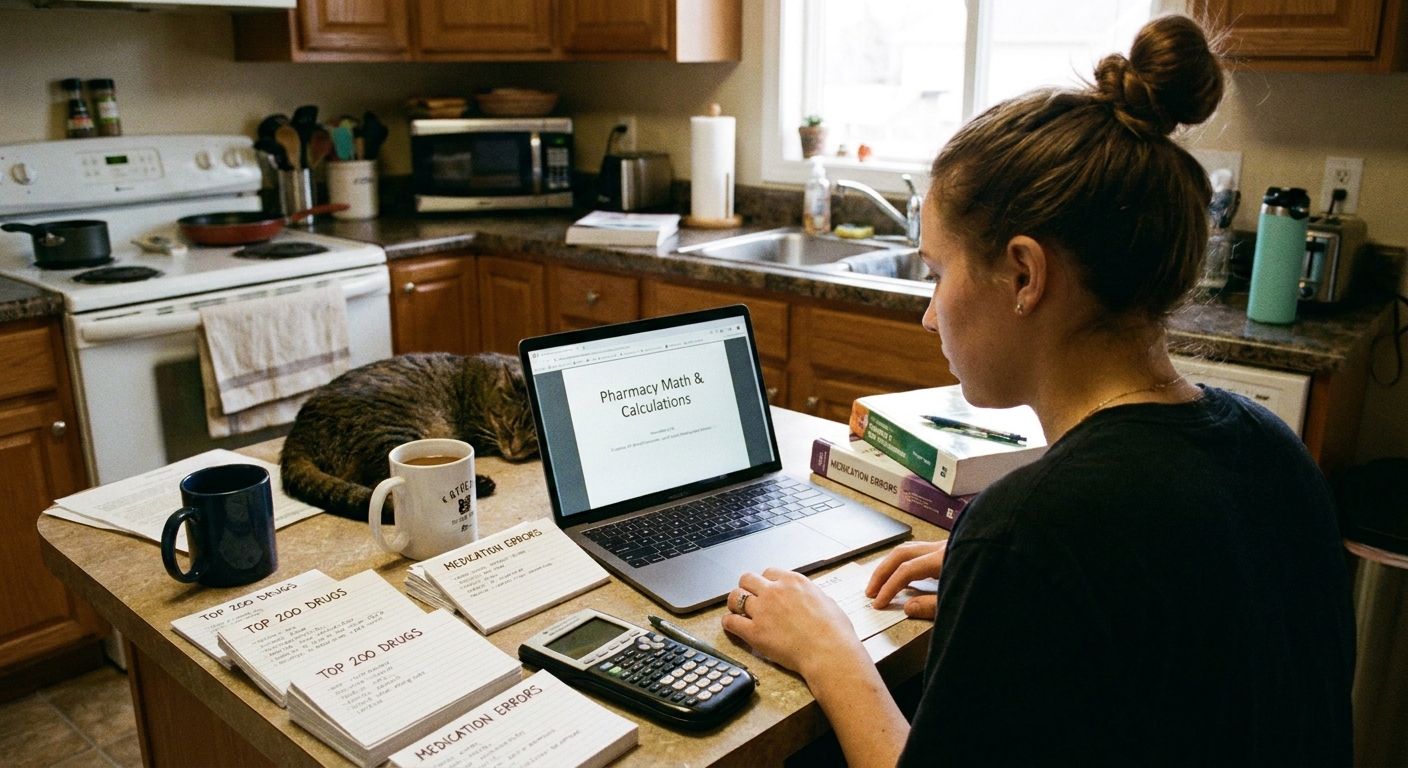
I do not hold formal clinical titles. What I did have was years of watching where people got stuck, and years of helping them get unstuck. I became the person coworkers came to when their study plan turned into a pile of scattered notes, screenshots, and half-highlighted printouts. The goal was never to sound smarter. The goal was to make the next step obvious.
Pharmacy Tech Study exists for that exact reason: to build a clearer path through career study, especially when the material feels overwhelming or the “right way” to prepare is hard to pin down.
What this site is (and what it is not)
Pharmacy Tech Study is a practical resource library for people who want structure. I focus on study frameworks, everyday pharmacy logic, and the habits that make learning stick. That can look like learning the rhythm of intake to fill to pickup, getting comfortable with common abbreviations on labels, and building routines that catch simple mistakes early. You will see a lot of checklists, step-by-step breakdowns, and plain-language explanations, because that is what worked best when I was training people in a high-volume setting.
This site is not a replacement for your program, your instructor, or your workplace training. It also is not medical advice. Always follow your pharmacist, your instructors, your workplace policies, and your local regulations. Think of this site like a well-organized workbench. You still bring the tools you are required to use, but I help you lay them out so you can actually build something with them.
What you can expect here
I write for the student who is capable, motivated, and tired of feeling behind. The tone is supportive on purpose. Pharmacy work is detail-heavy, and anxiety loves detail-heavy environments. A clear plan helps.
- Start with exam prep: If you are working toward certification, begin in Pharmacy Tech Exam for how to think about prep, pacing, and what to study first.
- Use repeatable study frameworks: The Study Guides section is built to help you review consistently, not cram chaotically.
- Explore related healthcare paths: If you are still deciding where pharmacy fits into your bigger plan, browse Healthcare Careers for grounded explanations of adjacent roles and what they typically involve.
- Prepare for interviews: When you are ready to step into a new role, Job Interview Tips focuses on preparation that reduces nerves and improves follow-through.
- Get organized fast: If your materials are scattered across notebooks and browser tabs, organising pharmacy tech exam study sources is one of the fastest ways to feel in control again.
A quick note on scope: I aim for guidance that is broadly useful no matter where you live, but exam requirements and job duties vary by country and sometimes by state or province. Use what applies to your situation, and defer to your local rules and your program.
My approach to learning
In a pharmacy, you do not learn everything in a day. You learn the next thing, and you learn it well enough that it becomes automatic. That is the mindset I write from.
When I build a guide, I try to answer the questions I heard most often at the counter:
- What matters first, and what can wait?
- What is the simplest way to practice this without getting lost?
- What mistakes are normal here, and how do I catch them early?
- How do I turn “I studied” into “I can actually recall it under pressure”?
Outside of writing, I’m usually restoring vintage bicycles or hiking local trails with my rescue dog, Barnaby. Both hobbies keep me honest. Bike repairs teach patience and systems thinking. Hiking reminds me that progress is still progress, even when it is slower than you wanted.

Questions and feedback
If something is unclear, if you spot an error, or if you have a suggestion for what would make a guide more useful, I want to hear from you. The best resources get better through real-world reader feedback.
You can reach me through the contact form at /contact/.
For site policies, you can read the Privacy Policy and Terms of Service. If you are just getting started, head back to the home page and choose the section that fits where you are right now.