
I spent over a decade working the front counter in busy community pharmacies, and I loved the pace. What surprised me most, though, was how many strong technicians quietly wanted a change. Not because they were “done” with healthcare, but because they wanted different hours, less nonstop foot traffic, more growth, or simply a role where their pharmacy knowledge carried more weight.
If you are certified and you have real pharmacy workflow experience, you already have something valuable: you understand medications, insurance friction points, documentation, and what happens when details get missed. In this guide, I will walk you through three alternative career paths that can make excellent pivots for certified pharmacy technicians: medical billing, health informatics, and pharmaceutical sales.
Quick note on that last one: pharmaceutical sales is more “industry” than traditional patient care, but it is still healthcare-adjacent work. You are working around medications, access barriers, and provider offices, just from the outside rather than behind the counter.

Why pharmacy tech experience transfers so well
Even if your title has always been “pharmacy technician,” your day-to-day skills are broader than most job postings make it sound. Here is what you are already doing that many adjacent roles require.
- Accuracy under pressure: verifying patient identifiers, selecting the right product, catching prescriber errors, managing high volume.
- Insurance literacy: prior authorizations, rejections, formularies, plan limits, coordination of benefits.
- Regulated documentation habits: HIPAA awareness, audit trails, and (depending on your role and setting) controlled substance handling and recordkeeping.
- Patient and provider communication: translating confusing information into plain language and keeping conversations calm.
- Systems thinking: you already understand that one missing field can break a whole process.
If you want to zoom out and compare more paths beyond the three in this article, start here: Guide to healthcare careers.
Pivot 1: Medical billing and revenue cycle
Medical billing can be one of the cleanest transitions for pharmacy technicians because it lives in the same world you already know: coverage rules, codes, documentation, and “why did this claim reject?” troubleshooting. The biggest shift is that you are working with claims and compliance more than medications. Hiring speed varies by local market and how much administrative experience you can show, but the overlap is real.
What you actually do
- Submit claims to insurers and follow payer rules
- Work claim denials and appeals
- Verify eligibility, benefits, and authorization requirements
- Post payments, reconcile accounts, and correct coding or data issues
- Communicate with patients about balances and billing questions
Where pharmacy techs fit best
- Specialty pharmacy billing: high-dollar meds, authorizations, and documentation-heavy workflows
- Infusion or clinic billing: frequent prior authorization, benefits investigation, and payer follow-up
- Hospital revenue cycle teams: structured processes and role specialization
Skills you already have that employers care about
- Reading and interpreting insurance rejections
- Calling payers, documenting outcomes, and moving tasks forward
- Comfort with sensitive data and compliance expectations
- Knowing how medication choices affect coverage and cost
Common gaps to close
- Coding basics: ICD-10-CM, CPT, and HCPCS (you do not need to master everything to get hired, but familiarity helps)
- Revenue cycle language: EOBs, remittances, clearinghouses, aging reports
- Software exposure: EHR and billing platforms vary, but the logic is similar
Credentials to know about
Many entry-level billing roles do not require a certification, but some employers like to see coding and billing credentials (or progress toward one). Treat it as a “nice to have,” not an automatic barrier.
Practical first step: rewrite your pharmacy experience in billing language. “Resolved third-party rejections daily” becomes “performed benefits verification and claim troubleshooting; improved turnaround time through consistent follow-up and documentation.” If you need help translating experience into resume bullets, see pharmacy technician resume tips. Even if you do have experience, the phrasing approach is the useful part.

Pivot 2: Health informatics
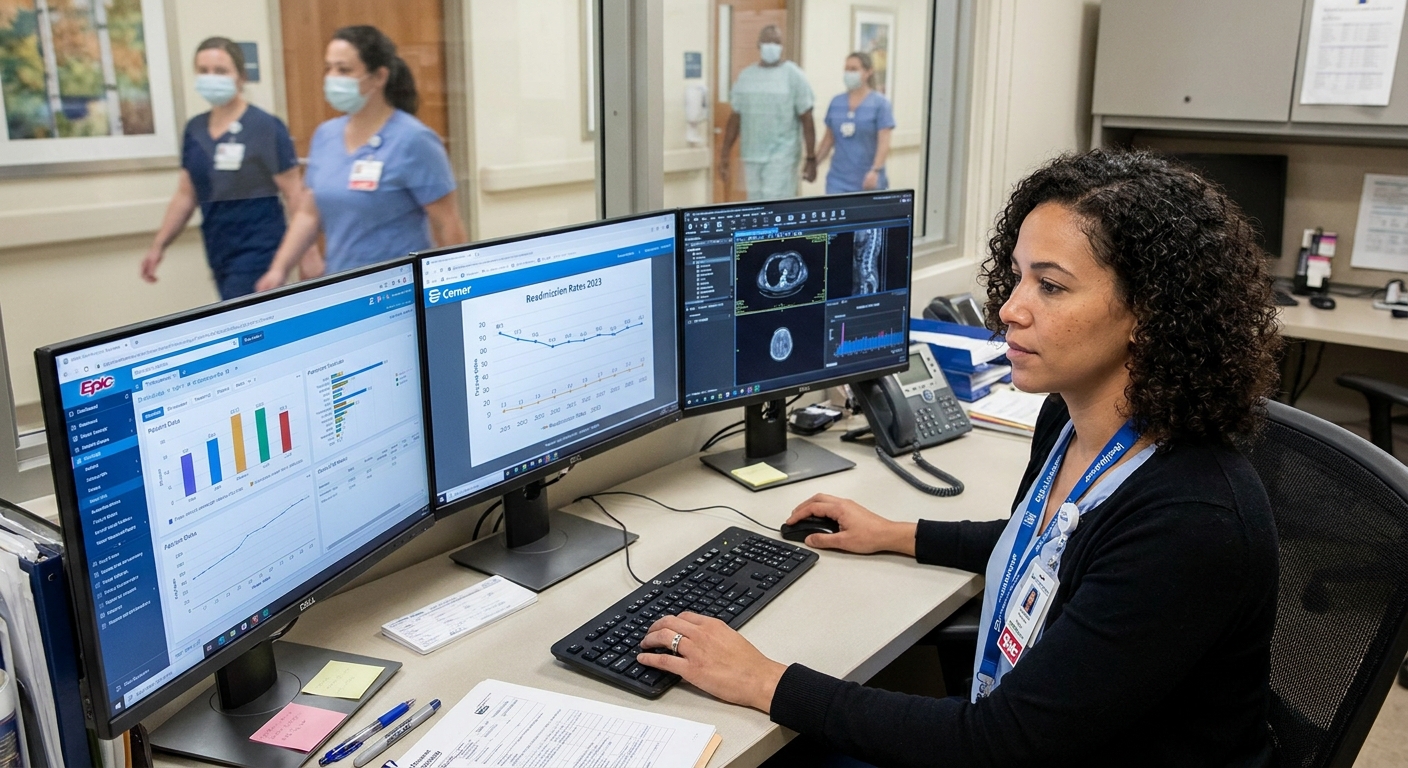
Health informatics is the bridge between clinical work and data systems. Think of it as improving how healthcare information is captured, stored, and used so that patient care and operations run better. Pharmacy technicians tend to be strong candidates because techs notice process friction. We see where errors happen, where steps are duplicated, and where a single dropdown choice can derail an entire claim.
One reality check: many informatics roles are competitive, and some employers prefer a degree, prior hospital experience, or specific EHR training. The good news is that there are entry points that let you build toward informatics over time.
Job titles to look for
- Pharmacy informatics specialist (or informatics technician)
- Medication safety support roles
- Medication reconciliation support roles
- EHR support specialist
- Clinical application support (entry-level, system support focused)
- Health information technician (often HIM adjacent)
What you do day-to-day
- Support medication-related build in an EHR or pharmacy system (order sets, formularies, alerts)
- Help troubleshoot user issues and document fixes
- Participate in process improvement projects
- Track errors, near misses, or data quality issues and help reduce them
- Train staff on system changes and safer processes
What to emphasize from your pharmacy background
- Process awareness: you understand intake, adjudication, filling, verification, and pickup as one connected system.
- Safety mindset: you know why “small” data errors matter in medication use.
- Documentation discipline: you can create consistent notes others can follow.
- Change management: you have lived through new formulary rules, new POS prompts, and new DUR messages, and you know how staff react.
How to start without going back to school
You do not always need a full degree in informatics to begin moving in this direction, especially if you start in support roles. That said, some positions do require an associate’s or bachelor’s degree, and some employers strongly prefer vendor-specific EHR training or certifications. The practical goal is to show systems comfort and evidence that you can learn technical processes.
- Volunteer for system tasks: become the person who writes the cheat sheet for a new process or trains new hires.
- Track process improvements: keep a simple log of problems you solved (what happened, what you changed, what improved).
- Learn the language: get comfortable with terms like interoperability, data quality, process mapping, root cause analysis.
If you are currently studying for certification or you want a confidence refresh on core pharmacy systems knowledge, start with our pharmacy tech exam guide and the practical study organization approach in how to organize your pharmacy tech study sources. Informatics teams love people who can learn structured material and apply it cleanly.
Pivot 3: Pharmaceutical sales
Pharmaceutical sales is a different kind of pivot. The work is relationship-driven and target-based, and it can involve travel. But pharmacy technicians often underestimate how much our experience helps. You already speak the language of medication use, common prescriber pain points, formulary barriers, and what patients actually struggle with at the counter.
Sales roles also vary a lot. Some are classic territory roles, some are inside sales, and some are more access-focused. Pay can be higher than many technician roles, but it is often more variable because bonuses and performance targets can be part of the package.
What the work looks like
- Share approved product information and resources with clinics and providers (within strict compliance guidelines)
- Build relationships with offices and healthcare systems
- Help offices understand common coverage pathways and support tools that your company is allowed to provide (varies by role)
- Manage a territory, plan visits, and document activity
A compliance reality check
Pharma is highly regulated. Reps generally cannot give personal medical advice, and they must stick to approved materials and on-label information. If you like clear rules and boundaries, that structure can actually be a plus.
Pharmacy tech strengths that translate
- Credibility: you know real-world adherence barriers and the practical reasons prescriptions fail.
- Product familiarity: you have lived in brand and generic landscapes.
- Objection handling: you already handle pushback, confusion, and frustration professionally.
- Access knowledge: you understand what “not covered” really means and how often access determines outcomes.
Common gaps to close
The hardest part for many technicians is not the drug knowledge. It is learning how to communicate value concisely, ask for next steps, and keep momentum without being pushy. This is learnable. Also note that many companies prefer a bachelor’s degree or prior sales experience, but there are exceptions, especially for candidates who interview well and can prove they can build relationships.
To prepare, I recommend practicing structured interview stories and confident delivery. Start with job interview tips, then build answers around times you:
- improved a process
- resolved a complex insurance issue
- trained a new hire successfully
- de-escalated a difficult customer interaction

How to choose the right pivot
When I helped new techs map next steps, the decision usually got easier once we separated “what sounds interesting” from “what fits my day-to-day energy.” Use this as a quick filter.
If you want predictable hours and detail work
- Medical billing, prior authorizations, revenue cycle, HIM-adjacent roles
If you like systems and improvement work
- Health informatics, EHR support, medication safety support roles
If you want relationship-building and goals
- Pharmaceutical sales, field reimbursement roles, patient access support roles
If you are considering staying in pharmacy but changing your environment, it can also help to compare settings. I wrote this because the “same job, totally different day” effect is very real: hospital vs retail pharmacy scenarios.
A simple 30-day plan
Big pivots feel overwhelming when you try to solve everything at once. I prefer a short, repeatable plan you can do while still working.
Week 1: Translate your experience
- Rewrite your resume bullets in the language of the role you want (billing, informatics, sales).
- List 10 work stories that show problem-solving, accuracy, and communication.
Week 2: Close one skill gap
- Billing: learn the basics of claims, denials, and common code types.
- Informatics: learn process mapping and basic data quality concepts.
- Sales: practice discovery questions and concise explanations.
Week 3: Build proof
- Create a one-page “wins” document: problems you solved, metrics if you can support them, what tools you used.
- Ask a supervisor or pharmacist for a short reference statement you can quote in interviews (even informal feedback helps you prepare).
Week 4: Apply with focus
- Apply to 10 to 15 roles that clearly match your chosen pivot.
- Customize only the top third of your resume so you stay consistent and do not burn out.
- Do two mock interviews using structured stories.
FAQ
Do I need to keep my pharmacy tech certification if I leave pharmacy?
It depends on your target role. Billing and informatics jobs may not require it, but maintaining certification can still strengthen your credibility, especially for medication-adjacent roles (specialty billing, medication safety support, informatics roles tied to pharmacy). Check your state renewal rules and cost before you decide.
Which pivot is the fastest to land?
Medical billing and revenue cycle roles are often the fastest transition because the skill overlap with claims troubleshooting is direct. That said, local hiring markets matter, and employers may prioritize candidates who already have some billing or coding exposure. Informatics can take longer if roles are competitive in your area, but internal moves within a hospital system can be a strong path. Sales can be fast if you interview well and your background fits what the company is looking for.
What should I say when asked why I am leaving the pharmacy?
Keep it forward-focused. I like phrasing that emphasizes fit and growth: you enjoyed healthcare and accuracy-driven work, and you want to apply those skills in a role that focuses more on systems, revenue cycle, or provider education. Avoid venting about customers or workload, even if that is the honest catalyst.
Will I take a pay cut?
Sometimes at first, yes, especially if you are moving into an entry-level office role. Longer term, the ceiling can be higher in informatics and some revenue cycle specialties, and sales can be higher but more variable. For context on the pharmacy side, you can compare typical ranges in our pharmacy technician salary guide, then evaluate offers based on schedule, benefits, and long-term growth.
Where to go next
If you are serious about a pivot, treat it the same way you treated certification: pick one track, learn the vocabulary, and practice the scenarios. Structure beats motivation when you are tired after a long shift.
- For broader role exploration: Guide to healthcare careers
- For interview prep that actually sounds like you: Job interview tips
- For organizing study or skill-building materials: Study guides