
I spent years on the retail counter watching the same pattern play out: strong techs would hit their stride, then start looking for a role with more predictable hours, less sprinting between windows, and more focus work. These days, a lot of that “next step” is happening without a commute.
Remote pharmacy technician jobs are real, and they can be a great fit for the right person. The trick is understanding what these roles actually do day to day, then tailoring your application so you look like someone who can be trusted with accurate work outside of a pharmacy’s four walls.
One quick reality check before you get excited: availability varies a lot by employer and by state rules. Some “remote” jobs are fully work from home, some are hybrid, and plenty still require you to live in specific states or time zones for licensing and compliance reasons.

What “remote pharmacy tech” means
Most work-from-home pharmacy technician roles fall into a few buckets. Some are patient-facing by phone, some are provider-facing, and some are purely behind-the-scenes production support.
Remote work does not mean lower standards. These jobs are typically measured by quality (accuracy), productivity (volume), and compliance (privacy and documentation). If you like clear rules, defined workflows, and focused task lists, you may love it.
Also, “predictable hours” is relative. A lot of remote teams run like call centers or mail operations, so expect shift bids, evenings, weekends, and occasional holiday rotations depending on the employer.
Common employers
- PBMs (pharmacy benefit managers) and health plans
- Mail-order and specialty pharmacies
- Hospitals and health systems with centralized refill teams (often hybrid, or limited to certain states)
- Telepharmacy vendors that support multiple sites
- Pharmacy software and services companies (less common, but growing)
3 remote roles to know
Job titles vary wildly. Two postings can sound similar and be completely different. Here are the big three I see most often, translated into plain English.
1) Telepharmacy support
What you do: Support pharmacists and patients remotely. Depending on the model, you might triage calls, gather patient info, assist with refill requests, coordinate transfers, help with basic troubleshooting, or support workflows that route prescriptions to a remote pharmacist for verification.
What it feels like: A lot like the “front-of-house” rhythm, just with a headset instead of a register. You need calm phone skills, clean documentation habits, and the ability to follow a script without sounding like a robot.
Helpful strengths:
- Customer service under pressure
- Clean call notes and message taking
- Insurance basics and prior auth awareness
- Comfort explaining next steps to patients
2) Pharmacy data entry (often mail-order)
What you do: Enter prescriptions, resolve simple rejection codes, match patient profiles, and ensure the prescription record is accurate so it can move to the next step. Some roles include inbound eRx and fax processing.
What it feels like: Quiet, repetitive, accuracy-heavy work. Think of it like building perfect “order tickets” all day. If you are the kind of person who enjoyed catching a missing DEA number format issue or a mismatched days’ supply, this can be your lane.
Helpful strengths:
- Typing accuracy and speed
- Strong comfort with sig codes and abbreviations
- Detail orientation with names, dates, NDCs, quantities
- Willingness to follow precise entry standards
3) Prior authorization (PA) and benefits support
What you do: Work PA queues, contact provider offices, request clinical documentation, submit forms, check plan criteria, and keep the case moving. You may also handle benefit investigations for specialty medications.
What it feels like: A puzzle plus a follow-up game. You need patience, persistence, and strong written communication. It is less about selling and more about correctly documenting what you requested, what you received, and what happens next.
Helpful strengths:
- Understanding insurance rejections and terminology
- Professional phone etiquette with clinics
- Organized follow-up habits
- Comfort reading plan requirements and documenting actions
What remote employers want
Retail and hospital experience help, but remote teams are usually hiring for predictable performance. These are the skills that tend to separate “maybe” from “interview.”
Accuracy under low supervision
In a busy store, someone is always shoulder-tapping you. At home, it is on you to catch your own mistakes. Employers look for proof you can follow process every time.
Documentation that is clear
Your notes have to stand on their own. If someone else picks up the case tomorrow, they should instantly see what happened and what to do next.
Comfort with pharmacy math
Remote queues often include days’ supply fixes, quantity validation, and conversion logic. If you feel rusty, spend time tightening this up before interviews. My walkthrough is here: Pharmacy math and conversions.
Fluency with sig codes
Data entry and order clarification are much easier when common abbreviations are automatic. If you need a refresher, use: Pharmacy sig codes and medical abbreviations.
Privacy habits that are automatic
Remote work adds extra scrutiny around HIPAA and secure handling. You should be ready to explain how you prevent screen visibility, how you handle printed materials (usually: you do not), and what you do if you receive PHI in an unsafe channel.
Comfort being measured
Most remote roles are monitored more than retail, just in a different way. You might hear metrics like tickets per hour, cases closed per day, average handle time (for phone work), schedule adherence, and QA audits. None of that is scary if you like a clear scoreboard, but it is a real part of the job.
Remote-ready resume tips
I have reviewed a lot of tech resumes that look like a job description copy-paste. For remote roles, you want to do something different: prove you can handle volume, accuracy, and communication without constant oversight.
Use outcome-based bullet points
- Instead of: “Processed prescriptions.”
- Try: “Processed e.g., 250 to 350 prescriptions per shift (depending on store volume) while maintaining consistent accuracy and complete documentation.”
Add a “Remote-ready” skills section
Keep it honest, but make it easy for recruiters to see the match. Examples:
- Phone-based patient support and message documentation
- Insurance rejection resolution and PA coordination
- High-accuracy data entry, sig interpretation, days’ supply review
- HIPAA-conscious workflow and secure handling of PHI
- Comfort working from SOPs and ticketing systems
Translate retail into remote language
Retail experience is valuable, you just have to frame it in a way remote teams recognize.
- “Customer service” becomes phone-based patient support and de-escalation.
- “Drop-off” becomes intake, triage, and prescription clarification.
- “Insurance problems” becomes benefits verification, rejection troubleshooting, and PA coordination.
- “Filing” becomes documentation and compliance.
Certification: say it clearly
If you are certified, put it right up top (and include your active status if applicable). If you are deciding between exams, see: PTCB vs ExCPT.
A smart remote job search
Remote postings attract more applicants, so you need a tighter plan than “apply to everything.” Here is a practical approach I recommend.
Step 1: Pick your lane
Decide which bucket you are targeting for the next 60 days:
- Telepharmacy support (phones, coordination)
- Data entry (speed plus accuracy)
- Prior auth and benefits (process, persistence)
This helps you customize your resume and prevents you from looking unfocused.
Step 2: Confirm licensing and location rules
Before you spend an hour on an application, skim for requirements like “must live in X state,” “active registration in X state,” or “license required in multiple states.” Some employers will only hire where they are set up to employ and supervise technicians. It is not personal, it is compliance.
Step 3: Build a keyword list from 10 postings
Open 10 real postings and list repeated phrases. You are not gaming the system, you are speaking the employer’s language. Common examples include:
- prior authorization
- benefits investigation
- refill authorization
- data entry
- HIPAA
- high volume
- ticketing system
- call center
Step 4: Apply in batches, then track follow-ups
Remote hiring teams move fast. Create a simple tracker with: company, role, date applied, recruiter contact (if available), and next step. Treat it like a PA queue: organized follow-up wins.
Step 5: Prep for remote-specific questions
Remote interviews often focus on how you stay accurate and accountable. If you want a structured prep routine, use: Job interview tips.
Remote interview answers
You do not need fancy language. You need proof you can work a process.
“How do you stay organized at home?”
Talk about routines that translate directly to compliance and productivity: a written task list, a consistent start-of-shift system check, scheduled breaks, and documenting every action before moving to the next case.
“How do you prevent errors?”
Give a repeatable method. For example: verify patient identifiers first, then drug and strength, then directions, then quantity and days’ supply, then prescriber details. Mention double-check points, not just “I’m detail-oriented.”
“What do you do when you do not know something?”
The best answer is calm escalation: check the SOP, search internal knowledge base if available, then message the lead or pharmacist with a concise summary and your proposed next step.
“Tell me about a difficult patient or clinic call.”
Use a simple structure: what they needed, what the barrier was, what you did, and how you documented it. Remote teams love documentation and closure.
Home setup basics
Most remote pharmacy tech jobs will tell you their requirements, and many provide equipment. Even so, you should think through the practical side before your first day.
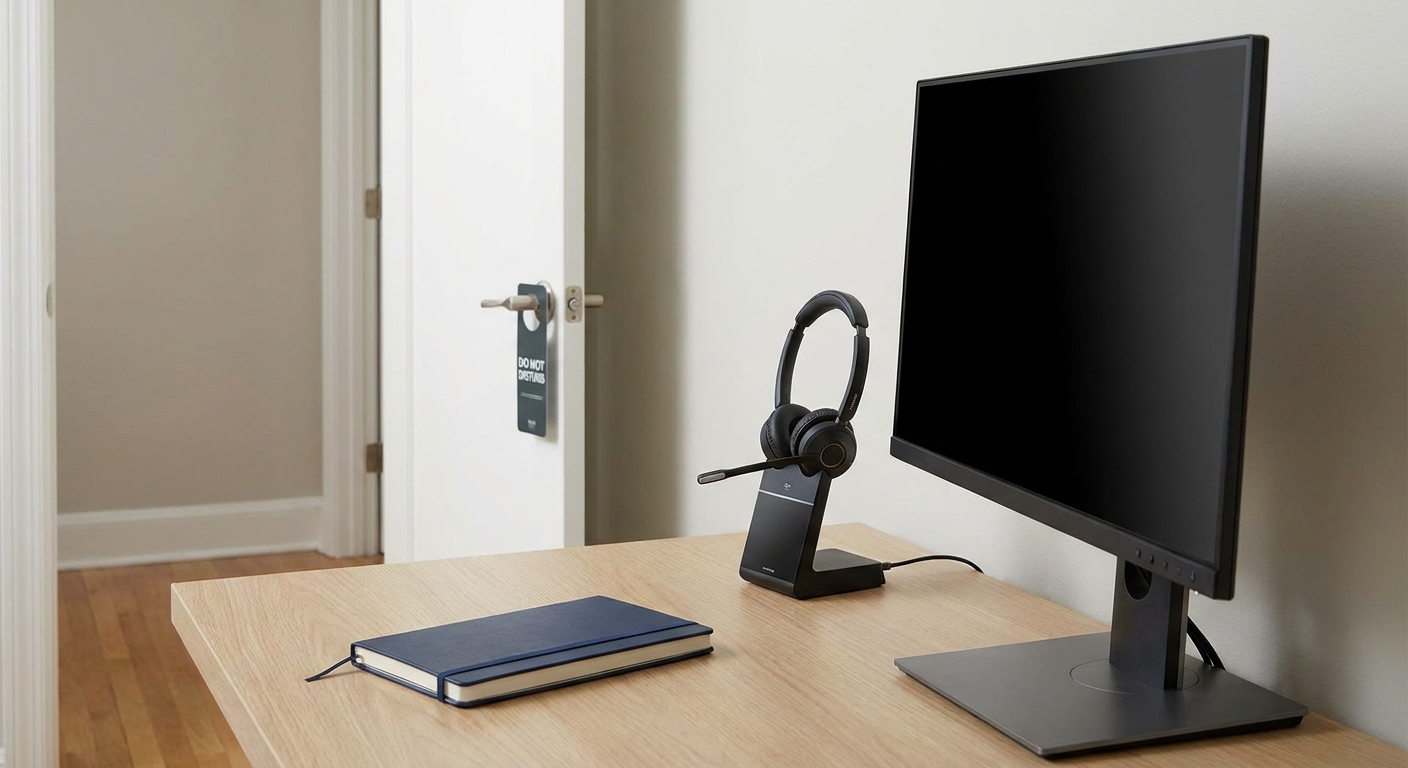
- Privacy: a door you can close, screen not visible to others, no smart speaker in the room, and a habit of locking your computer anytime you step away.
- Noise: consistent quiet. If you live with others, set expectations early.
- Internet: stable connection. If your Wi-Fi is unreliable, consider a wired option.
- Ergonomics: you will be seated a lot more than in retail. A supportive chair matters.
If you are transitioning from retail and want a broader look at role options, I mapped out several paths here: Healthcare careers guide.
Remote job red flags
Most postings are legitimate, but I still recommend scanning for basic warning signs.
- Vague employer identity (no clear company name or location at all)
- Upfront fees for training, equipment, or “certification assistance”
- Pay that is wildly above market with no explanation and minimal requirements
- Pressure to communicate off-platform immediately, especially via encrypted messaging apps
If something feels off, trust that instinct and move on.
FAQ
Do I need certification to get a remote pharmacy tech job?
Not always, but it helps a lot. Many remote employers prefer certification, and some roles and employers require it, especially in specialty and mail-order settings. If you are planning your certification path, start with the pharmacy tech exam guide and review the certification application process step by step.
Can a brand-new tech get hired remotely?
It is possible, but harder. Employers often want proof you can work independently and understand pharmacy workflow. If you are new, consider targeting entry-friendly remote roles like structured data entry or call center support, and make your training, accuracy habits, and documentation strengths very obvious on your resume.
What is the biggest adjustment from retail to remote?
The pace is still fast, but it is a different kind of fast. You trade constant interruptions for long stretches of focused queue work. People who succeed build a routine and stick to it, especially around documenting each step before moving on.
Will I still use drug knowledge in remote work?
Yes, just differently. Instead of answering quick counter questions, you are more likely to apply drug knowledge to days’ supply logic, therapeutic alternatives, formulary restrictions, and spotting prescribing inconsistencies. If you are building your foundation, this helps: How to memorize the top 200 drugs.
A simple next step
If you want to land a remote role, pick one target lane (telepharmacy support, data entry, or prior auth), then rewrite your resume bullets to show accuracy, volume, and documentation. Remote hiring is competitive, but when your application reads like someone who can be trusted with a queue, you move to the top faster.
If you want to build that “trust signal” quickly, focus your study refresh on the practical basics: pharmacy law and ethics, math and conversions, and sig codes.