
When I was training brand new hires at a busy community pharmacy counter, the same pattern kept popping up. People did not fail because they were not smart. They failed because they were trying to study with a pile of random tabs, half-finished notes, and three different apps that did not agree on what mattered.
You do not need a pricey prep bundle to make progress. You need a small set of reliable, low-cost tools that cover the big exam domains, plus a system for using them on purpose.
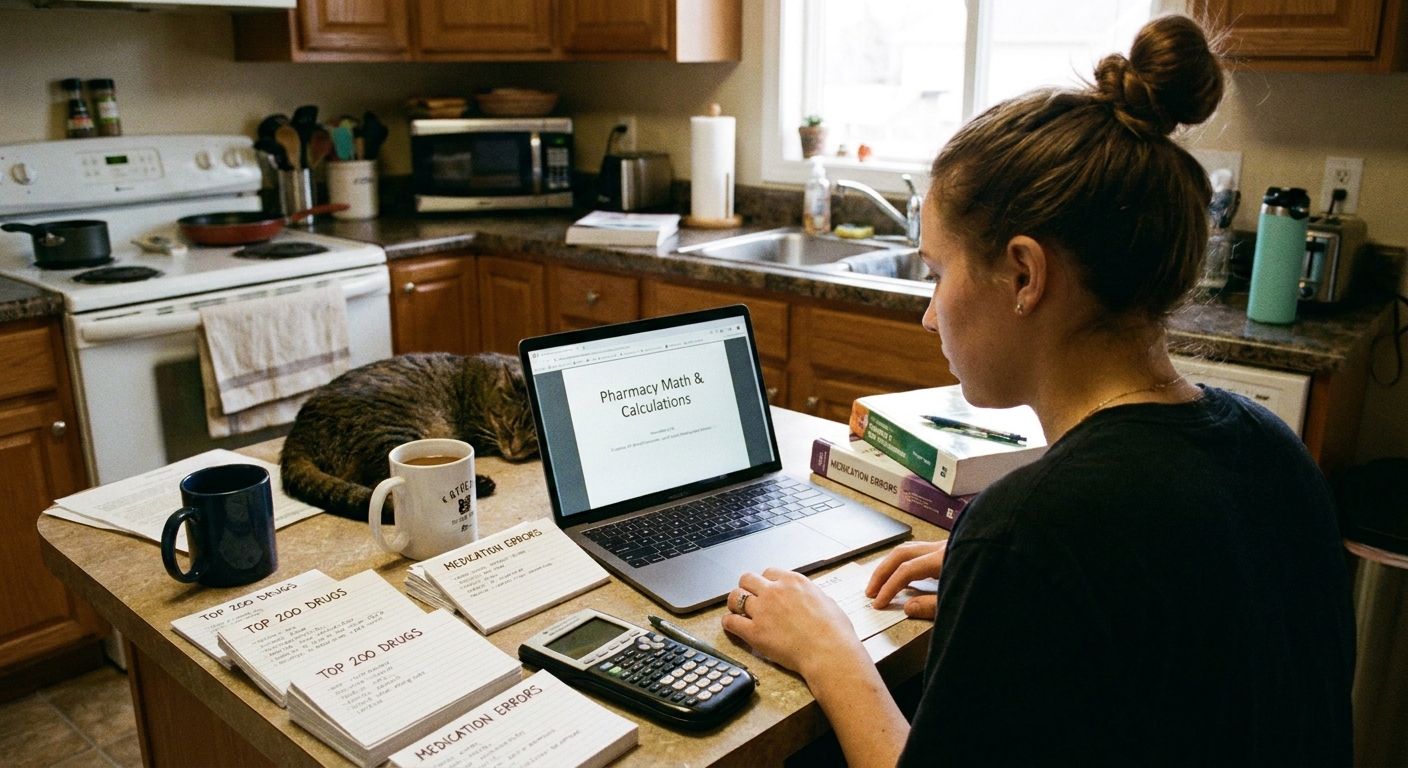
Below is the list I would hand to a motivated student on a budget, organized by what each resource does best.
Start here: build your study stack
Before you download anything, decide on your “stack.” I like three layers:
- Layer 1 (Primary): One main program or book you follow in order.
- Layer 2 (Practice): Question banks and quizzes to expose weak spots.
- Layer 3 (Support): Flashcards, math drills, and quick references for daily reps.
If you want a simple way to organize your tabs, notes, and sources so you are not re-planning every night, use my framework here: Organise Pharmacy Tech Exam Study Sources.
Pick a primary resource (budget)
This is where most people get stuck. They collect “helpful stuff” but never commit to one path.
On a budget, your Layer 1 usually falls into one of these buckets:
- A structured book or course: best if you need a clear start-to-finish plan and you like reading lessons in order.
- A structured site guide plus a schedule: best if you learn in shorter sessions and want to move fast while still covering every domain.
- Your program notes plus a checklist: best if you are currently enrolled and your instructor is aligned with your exam outline. Add practice questions to prove you can apply it.
No matter what you choose, the test is the same: can you recall, calculate, and apply under time pressure. Your primary resource is just the backbone that keeps you moving.
Official exam outlines (high trust)
These are not “study courses,” but they help you aim your effort at what the exams actually test.
PTCB exam content outline (free)
The Pharmacy Technician Certification Board publishes an exam content outline that breaks the exam into domain areas and typical weight ranges. Use it as a coverage checklist, not as a promise of exact question counts.
- Best for: planning and pacing across domains
- Cost: free
When students ask me which test to take first, the right answer is usually “the one your employer, state, or program expects.” If you are still deciding, I broke down the practical differences here: PTCB vs ExCPT.
ExCPT content outline (free)
Same idea. Use the outline to drive your checklist and to sanity-check any question bank you use. If a resource never touches a major domain, it is a supplement, not your core.
Top 200 drug tools
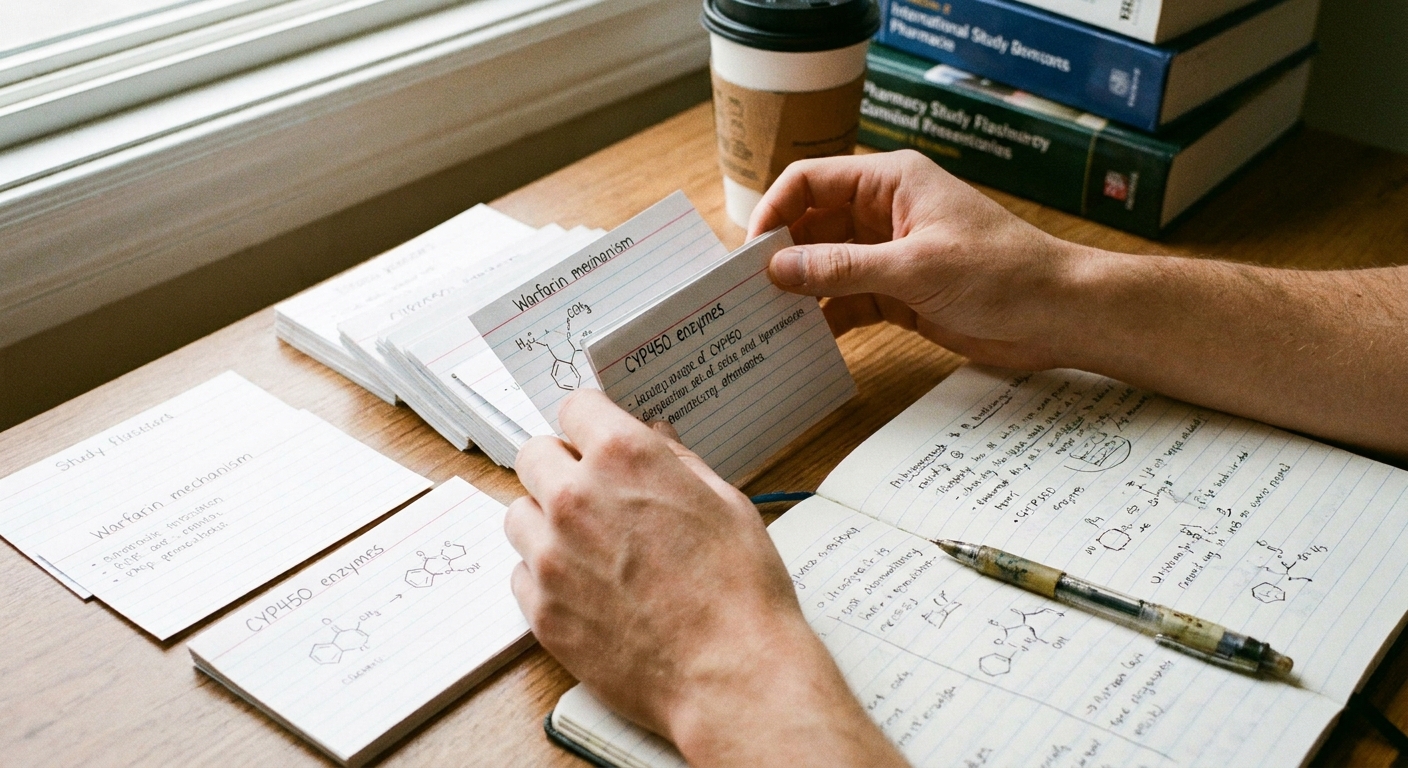
If you worked retail like I did, you know the drug shelves teach you a lot, but the exam wants recognition and classification. Your goal is speed: brand, generic, class, and the “why do we use it?” in one breath.
Quizlet (free, optional paid upgrade)
Quizlet is popular because it lowers the friction. You can do 5 minutes in a checkout line and still get a rep in. The downside is quality varies by set.
- Use it well: pick one solid set and stick with it for 3 to 4 weeks before you hop.
- What to include: brand, generic, class, common indication, and one major warning or counseling point.
- Cost: free for basic use
Anki (free on desktop and web, paid on iOS)
If you like the idea of spaced repetition, Anki is one of the best bargains. It is not flashy, but it is effective if you commit. Anki is free on desktop and web, and the AnkiMobile app on iOS is paid.
- Best for: long-term retention and preventing “forgetting cycles”
- Pro tip: keep cards simple. One prompt, one clear answer.
Quick quality checks for any drug list
Before you commit to a set, spot-check it. You are not being picky, you are protecting your time.
- It covers what you need: not just brand and generic, but drug class and a common use.
- It matches common current usage: generics and brands are spelled correctly and not wildly outdated.
- It is consistent: the set uses the same format on every card, so you are not relearning the layout.
If you want a structured way to learn the Top 200 without drowning in random lists, start with: Memorize the Top 200 Drugs.
Math and conversions practice
Pharmacy math is often an efficient place to pick up points because it is skill-based. You do not need a new lecture. You need consistent practice and a short list of conversions you can recall instantly.
Your one-page conversions sheet (free)
This is the simplest tool that works. Copy the core conversions by hand on one sheet and rewrite it from memory until it is automatic.
- Include: kg to lb, mg to g, mL to L, tsp to mL (and vice versa), household to metric, and basic day supply setups
- How to drill: rewrite from memory 3 times per week, then test yourself cold once per week
Targeted practice sets (free on this site)
I keep my math explanations step-by-step, because most people do not need more formulas. They need fewer formulas with better repetition. Start here: Pharmacy Math and Conversions.
Law, ethics, and safety
This category trips people up because it feels like “reading rules.” In real pharmacy work, it is more like recognizing risk. What would you do at the counter? What would you document? What would you refuse?
Scenario-based studying (free method)
Here is the habit I taught new staff: take any law or ethics topic and write three quick scenarios.
- One normal case: what you do when everything is fine
- One borderline case: what you do when something is missing or unclear
- One unsafe case: what you do when it should be escalated or refused
Example prompt: A patient asks for an early refill on a controlled medication because they are traveling. What information would you check, what would you document, and when do you escalate to the pharmacist?
If you want a clear, test-focused breakdown of what to know, start with: Pharmacy Law and Ethics: What You Must Know to Pass.

Practice questions: use them cheap
You can spend a lot on question banks. You can also waste even good free ones by doing them the wrong way.
The right way to use any question bank
- Do small sets: 10 to 25 questions at a time.
- Review immediately: your learning happens in review, not in clicking.
- Keep an error log: a simple notebook page with “Topic, What I chose, Why it was wrong, The rule.”
- Retest the same concepts: 48 hours later, then one week later.
Example error log line: Topic: Allegations. Chose: “dispense anyway.” Why wrong: tech cannot bypass a missing required element. Rule: when a required field is missing or a red flag appears, stop and escalate to the pharmacist.
Quick quality checks for question sets
- Explanations exist: not just right or wrong, but why.
- It matches the outline: it touches every major domain at least a little.
- It is not trick-only: some hard questions are fine, but it should also drill the fundamentals.
If you are building your exam plan and want to make sure you are not missing key areas, work through: Guide: Pharmacy Tech Exam.
Community resources (free)
Some of the best low-cost support is local.
Your public library
Many libraries offer:
- quiet study space and reliable Wi-Fi
- interlibrary loan for exam prep books
- free printing allowances or low-cost printing
- basic study skills workshops
If your attention gets shredded at home, a library can be the difference between “I studied” and “I sat near my notes.”
Study groups
A good study group is small and structured.
- Best size: 2 to 4 people
- Best format: 10 minutes check-in, 30 minutes silent work, 20 minutes teach-back
- Rule: if it becomes a chat, it is not a study group anymore
How to avoid overwhelm
Here is my quick filter. If a tool does not pass at least two of these, skip it.
- Clarity: explanations make sense on the first read
- Feedback: you can see exactly why an answer is right or wrong
- Repetition: it supports daily practice without friction
- Coverage: it matches the domains on your exam outline
- Consistency: you will realistically use it 4 days per week
If you want a broader map of study tools and how to combine them, I keep an updated hub here: Guide: Study Guides.
Budget study plan (2 weeks)
If you are starting from scratch, try this for the next 14 days.
Daily (25 to 45 minutes)
- 10 minutes: Top 200 flashcards (Anki or Quizlet)
- 10 minutes: math drills (one topic only)
- 10 to 25 minutes: practice questions with review and error log
Twice per week (45 to 60 minutes)
- Law and ethics scenarios: write and answer 3 scenarios
- Teach-back: explain one weak topic out loud, like you are training a new cashier
That is enough to build traction without spending much money. Once you can keep that rhythm, then consider upgrading a single tool that solves a specific problem, like better explanations or more realistic practice questions.
FAQ
Do I need paid resources to pass the PTCB or ExCPT?
No. Many students pass with mostly free and low-cost tools. Paid resources can help, but only if you are already using a simple system and you know what the paid upgrade fixes.
What is the best free way to improve pharmacy math?
Consistent short practice plus a one-page conversions sheet you can recreate from memory. Start with the basics and do not jump topics daily.
How many Top 200 drugs should I study per day?
A realistic pace is 10 to 20 new drugs per week while you review older ones daily. Speed matters less than accuracy and recall under pressure.
What if I keep collecting resources and never feel ready?
That is usually a planning problem, not a motivation problem. Pick one primary resource, one question source, and one flashcard system, then follow your schedule for 14 days before you add anything new.