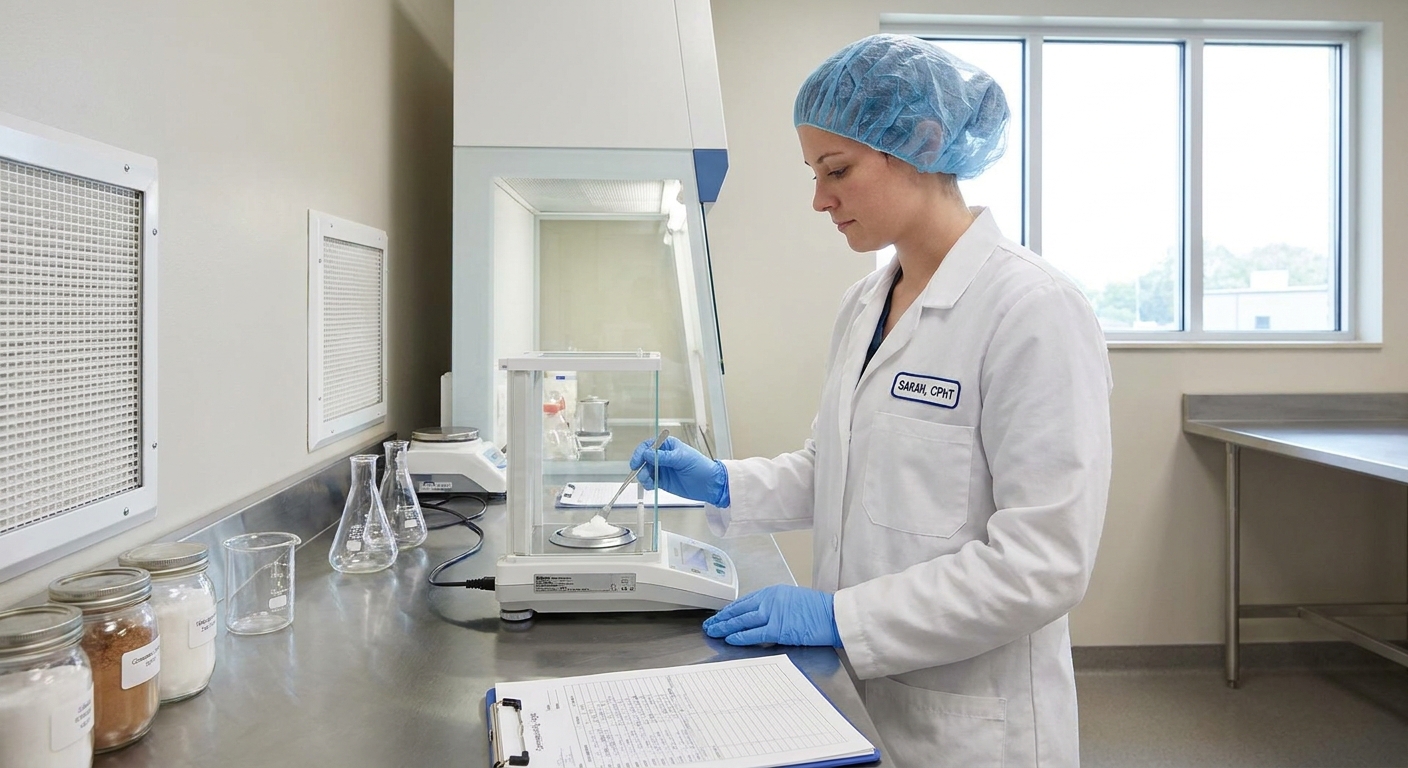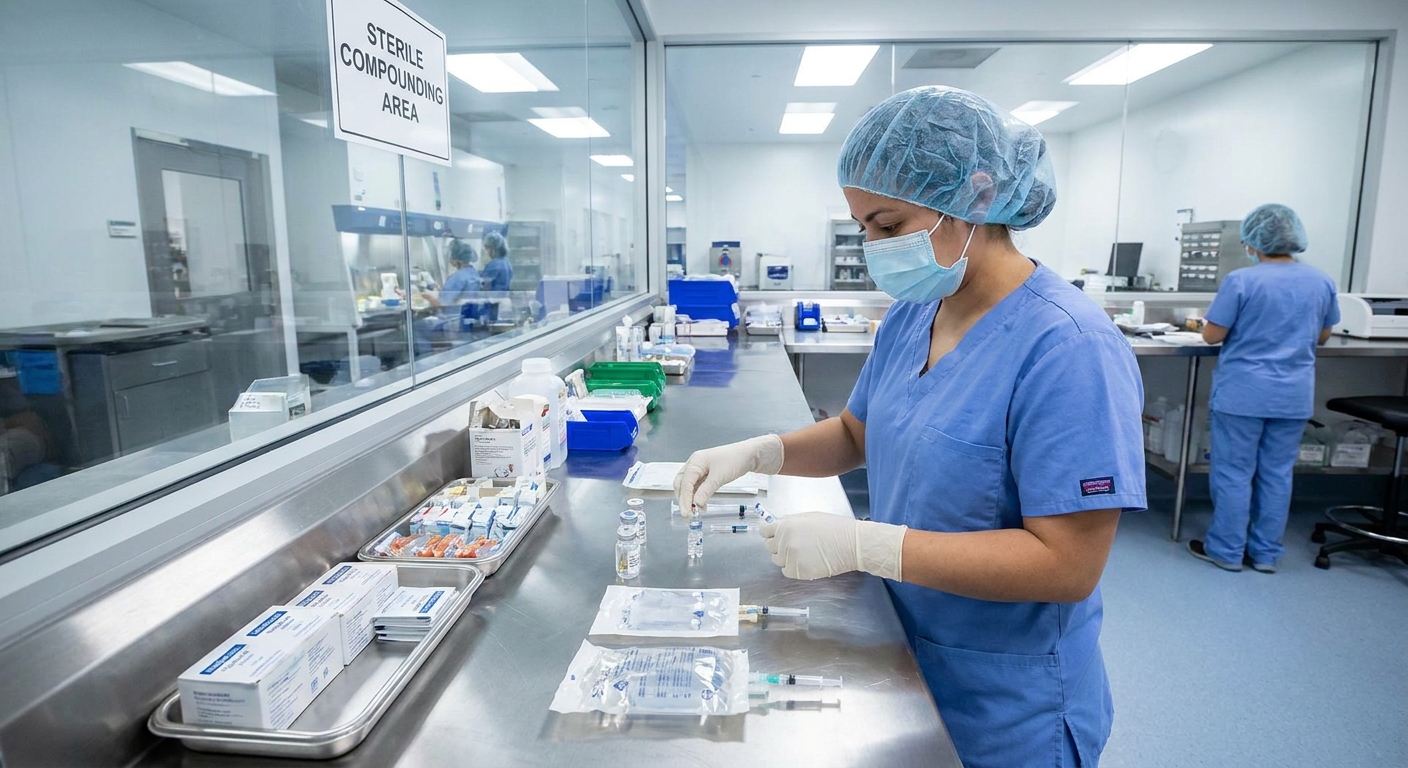

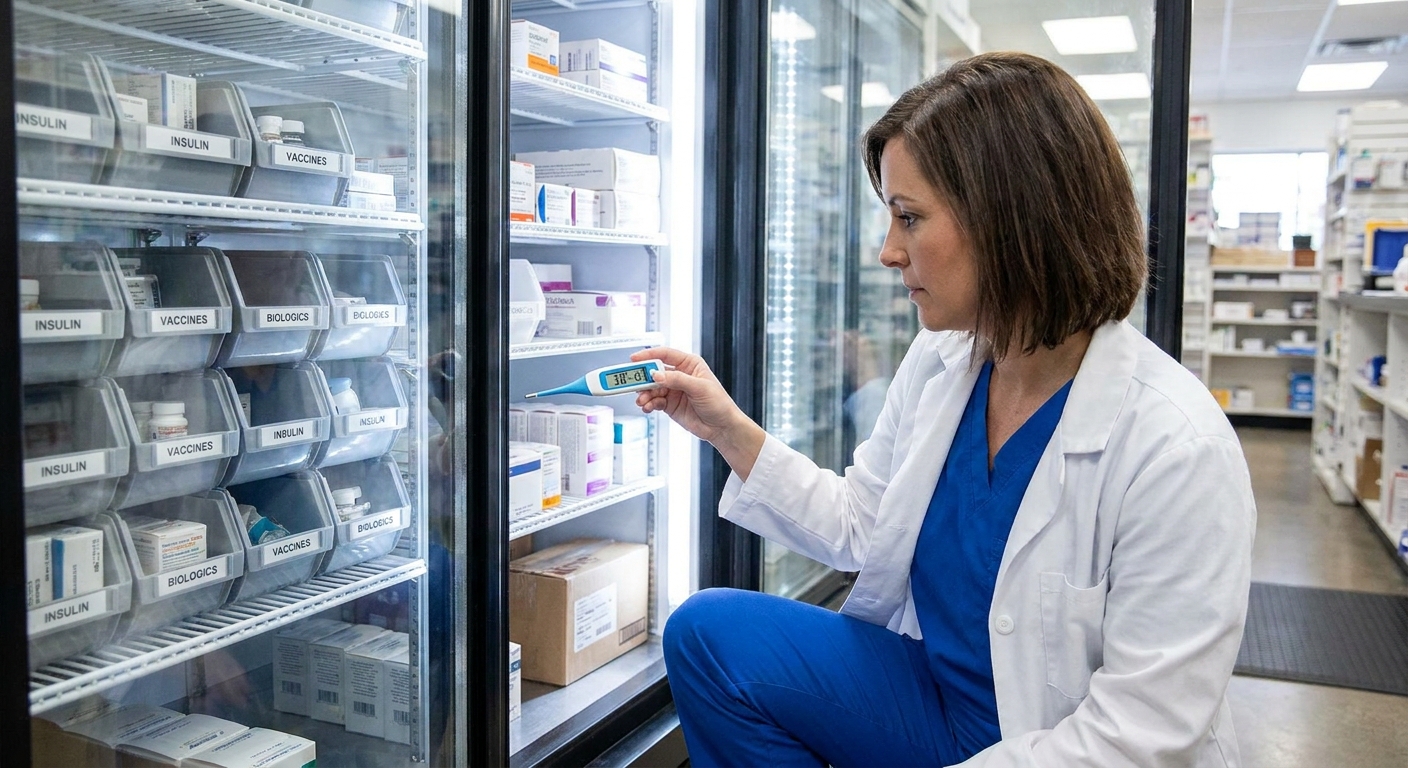
In my first few months working the front counter, I thought “storage temperature” was just a label you glanced at. Then I watched a new hire put an antibiotic suspension back on the shelf instead of the fridge, and suddenly the stakes were real. Temperatures are not trivia. They connect directly to stability, potency, and patient safety. The PTCB likes them because they are clear, testable, and tied to day-to-day workflow.
This guide gives you a quick reference for the temperature ranges you need in both Fahrenheit and Celsius, plus a practical way to memorize the most common beyond-use dates (BUDs) you will hear in retail and hospital settings.
Expiration vs BUD
Manufacturer expiration date is the date printed on the original container from the manufacturer. It applies to an unopened product stored per the label.
Beyond-use date (BUD) is the date you assign after a product is opened, mixed, compounded, repackaged, or otherwise changed from the original manufacturer container or condition.
On exams, BUD questions often show up as: “After reconstitution, how long is this good for?” or “How long can this remain at room temperature?” On the job, it is more like: “What date do I write on the label?”
If you need a broader framework for exam studying, I keep a structured set of tactics in our Study Guides hub.
Storage temperature ranges
When you are memorizing temperatures, anchor them to three “zones” you will see everywhere: freezer, refrigerator, and controlled room temperature. Most other terms are just narrower versions of those zones.
Core ranges to memorize by heart
| Term | Fahrenheit (°F) | Celsius (°C) | What it means in practice |
|---|---|---|---|
| Freezer | −13 to 14°F | −25 to −10°C | Actual freezer temps. Many cold-chain items also specify ≤−20°C, so always follow the product label or facility protocol. |
| Refrigerator | 36 to 46°F | 2 to 8°C | Your pharmacy fridge. Vaccines and many biologics live here. |
| Controlled room temperature (CRT) | 68 to 77°F | 20 to 25°C | Typical pharmacy shelf storage target. |
Extra terms that trip people up
| Term | Fahrenheit (°F) | Celsius (°C) | How to think about it |
|---|---|---|---|
| Cool | 46 to 59°F | 8 to 15°C | Between fridge and room temp. |
| Cold | Up to 46°F | Up to 8°C | ≤8°C. This can include refrigerator temps and colder, unless the label also says “do not freeze” or “protect from freezing.” |
| Warm | 86 to 104°F | 30 to 40°C | Warming cabinet territory. You will see it more in facility protocols than on typical outpatient labels. |
| Excessive heat | Above 104°F | Above 40°C | Where stability problems happen fast. |
| Protect from freezing | Keep above 32°F | Keep above 0°C | Do not let it freeze, even briefly. |
Study tip I used with new hires: memorize 2 to 8°C, 20 to 25°C, and −25 to −10°C first. Once those are automatic, everything else becomes “between” or “above.”
Quick C and F conversions
Most pharmacy questions do not require complex conversion math if you have the anchor points memorized.
Anchor points to drill
- 0°C = 32°F (freezing point of water)
- 2°C ≈ 36°F (low end of refrigerator)
- 8°C ≈ 46°F (high end of refrigerator)
- 20°C ≈ 68°F (low end of controlled room temp)
- 25°C ≈ 77°F (high end of controlled room temp)
- 30°C ≈ 86°F (start of “warm”)
- 40°C ≈ 104°F (excessive heat threshold)
If you want to practice the math side in the same study block, pair this with pharmacy math and conversions so the numbers stay connected to real tasks.
Common BUDs to know
BUD rules can vary by product and setting, so the best exam strategy is to memorize the high-frequency ones first, then learn how to read a label, package insert, or protocol for the exceptions.
Retail: antibiotic suspensions
Many reconstituted oral antibiotic suspensions cluster around two time windows:
- 10 days (often refrigerated)
- 14 days (often refrigerated, sometimes room temp depending on product)
One sentence that saves mistakes: this varies by drug and manufacturer, so treat “10 or 14” as a pattern, then verify the label.
How I memorized it: I treated oral suspensions like “short-lived food.” If it gets mixed with water, assume it is measured in days, not months. Then check the label for whether it is 10 or 14.
Insulin (high-yield workplace rule)
Insulin rules depend on the specific product and whether it is in a vial, pen, unopened, opened, or in use. For studying, the most useful habit is this:
- Know where to look: package insert and manufacturer storage table.
- Know the typical pattern: unopened products are refrigerated; once in use, many have a room-temperature in-use window measured in weeks.
On exams, if a question gives you an insulin name and asks for a precise number of days, it will typically supply enough context to use the provided reference excerpt. Your job is to apply it correctly, not guess.
Nitroglycerin SL tablets
Nitroglycerin tablets are sensitive to moisture and air. The testable concept is less about a universal day-count and more about container integrity:
- Keep in the original, tightly closed glass container with the original cap.
- Repackaging into standard plastic vials is generally discouraged because of volatility and moisture concerns, unless your policy addresses stability and packaging.
USP nonsterile compounding defaults
If your exam touches nonsterile compounding, you are likely to see the classic USP nonsterile default BUDs. Memorize these as defaults, unless stability data, a supporting reference, your formulation record, or an ingredient expiration requires an earlier date:
- Non-aqueous formulations: up to 6 months (or the earliest ingredient expiration, whichever is earlier)
- Water-containing oral formulations: up to 14 days when stored in the refrigerator
- Water-containing topical or mucosal formulations: up to 30 days
Want to reinforce this with law and safety context? My go-to pairing is pharmacy law and ethics, because documentation and labeling habits are where students lose easy points.
Sterile compounding note
If you see sterile compounding (CSP) BUDs, do not try to force it into one universal memorized table. Sterile BUDs depend on factors like preparation type and storage conditions. On the exam, you are more likely to be given a policy excerpt or scenario details and asked to apply them carefully.
How the PTCB tests this
In my experience training new staff, mistakes rarely come from not caring. They come from mixing up what the question is really asking. Exam items often hinge on one word.
Trigger phrases
- “Store at controlled room temperature” versus “refrigerate”
- “Protect from freezing” (means do not freeze, not “store frozen”)
- “After reconstitution” (BUD starts after mixing)
- “Opened” or “in use” (BUD starts after first puncture or first use)
- “Discard after” (the BUD is already given, your job is to calculate the date)
My favorite exam-day habit is to underline the starting event (opened, mixed, punctured) and the storage condition (room temp, fridge). If you want more test-day structure, use the checklist in Pharmacy Tech Exam Test-Day Checklist.
Flashcards method
I have seen students try to memorize 50 facts at once and end up remembering none. Here is a smaller system that works because it is organized like a pharmacy shelf.
Step 1: 6 temperature cards
- Front: Refrigerator. Back: 2 to 8°C (36 to 46°F).
- Front: Controlled room temp. Back: 20 to 25°C (68 to 77°F).
- Front: Freezer. Back: −25 to −10°C (−13 to 14°F).
- Front: Cool. Back: 8 to 15°C (46 to 59°F).
- Front: Warm. Back: 30 to 40°C (86 to 104°F).
- Front: Excessive heat. Back: >40°C (>104°F).
Step 2: 6 BUD cards
- Non-aqueous compounds → 6 months (default).
- Water-containing oral compounds → 14 days refrigerated (default).
- Water-containing topical or mucosal compounds → 30 days (default).
- Reconstituted oral suspensions → commonly 10 or 14 days (verify label).
- Nitroglycerin SL tablets → original glass container is the stability key.
- “Discard X days after opening” math → practice counting forward accurately.
Step 3: 3-minute bursts
Do three minutes when you sit down to study anything else. That is it. Small, frequent reps beat long, stressful cram sessions. If you want a bigger structure around this habit, plug it into the weekly blocks in my 30-day PTCB study schedule.
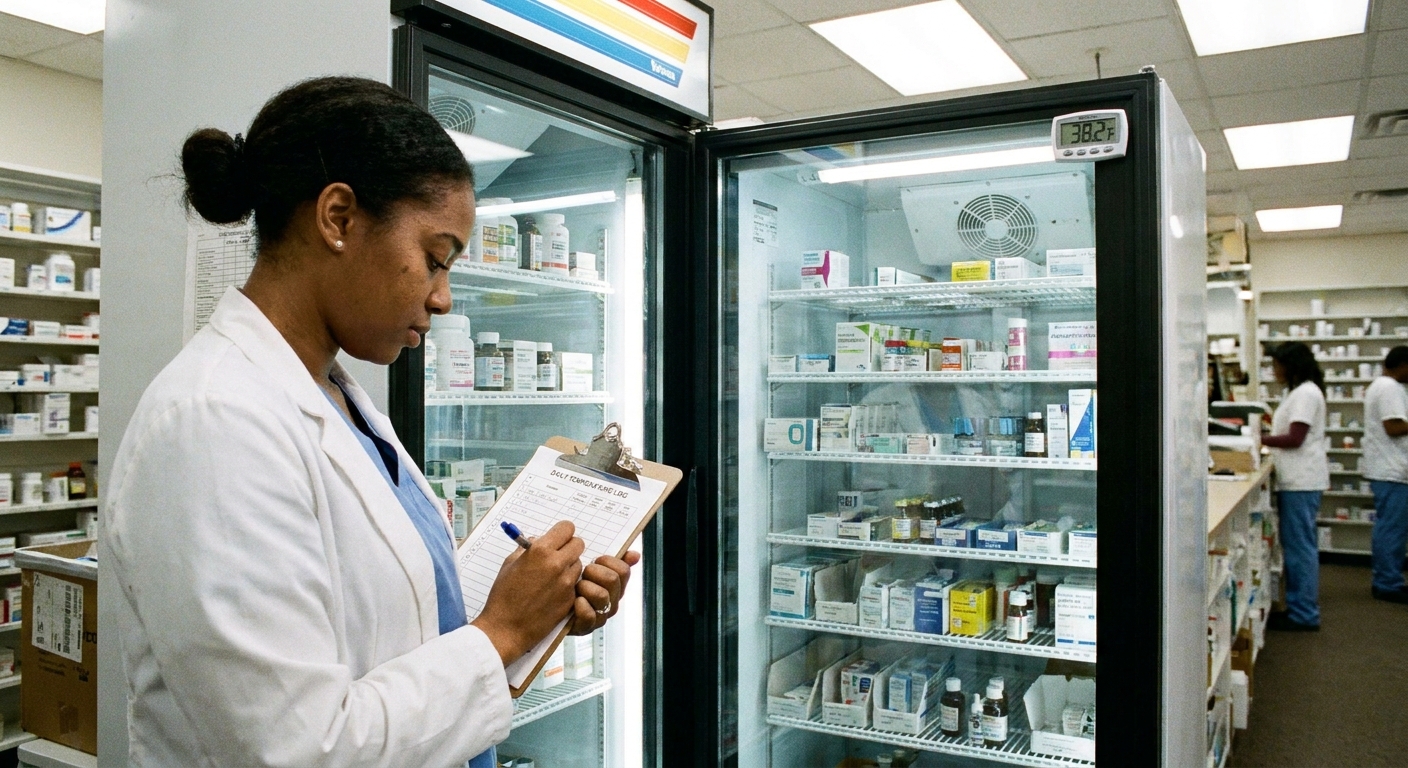
When temps go out of range
This is more job-skill than pure memorization, but it is worth understanding because it makes the numbers feel meaningful.
- Quarantine the product and physically separate it from usable stock.
- Label it clearly (for example, “Do Not Use”) per your site process.
- Notify the pharmacist or supervisor so the next steps are owned and documented.
- Document what happened: approximate time out of range, current temperature, and lot or expiration if needed.
- Follow site policy: many pharmacies check manufacturer stability info or contact the wholesaler or manufacturer for guidance.
- Do not guess. “It probably is fine” is not a pharmacy-standard answer.
Practice questions
1) What is the standard refrigerator range?
Answer: 2 to 8°C (36 to 46°F).
2) Controlled room temperature means what range?
Answer: 20 to 25°C (68 to 77°F).
3) A label says protect from freezing. What does that mean?
Answer: Keep it above 0°C (32°F) and prevent freezing.
4) A nonsterile water-containing oral compound has no stability data available. What default BUD is commonly used?
Answer: 14 days when stored in the refrigerator (default).
5) A product says Discard 14 days after reconstitution. You reconstituted it on April 3. What date do you discard?
Answer (exam-style): April 17.
In the real world, always follow your site’s labeling convention if it defines inclusive counting differently, but for the PTCB-style question, straightforward date addition is usually what they want.
Common mistakes
- Mixing up cool and cold: “cool” is a defined band between fridge and room temp; “cold” is ≤8°C.
- Assuming all liquids must be refrigerated: plenty of solutions are room-temp stable. Always follow labeling.
- Thinking BUD equals expiration: BUD is usually shorter because the product has been opened, mixed, or manipulated.
- Forgetting units on the exam: if the question is in °C, answer in °C. Train your eyes to notice the symbol.
More on our site
- Guide to the Pharmacy Tech Exam for how these topics show up across domains.
- Best free and low-cost study resources if you need more practice questions and reference material.
- How to organize pharmacy tech exam study sources if your notes are currently scattered across screenshots and loose pages.