

In the community pharmacies I worked in, inventory was the quiet force behind everything. If the shelf was empty, the phone started ringing. If a recall notice hit and we missed it, the whole day turned into damage control. On exam day, inventory questions usually look simple, but they are testing whether you understand the why behind the routine.
This review hits the inventory turnover, par levels, formularies, and recall procedures that show up most often on the pharmacy tech exam. I’ll keep it practical and frame it the way you will see it in a real workflow.
The big picture: inventory vs supply chain
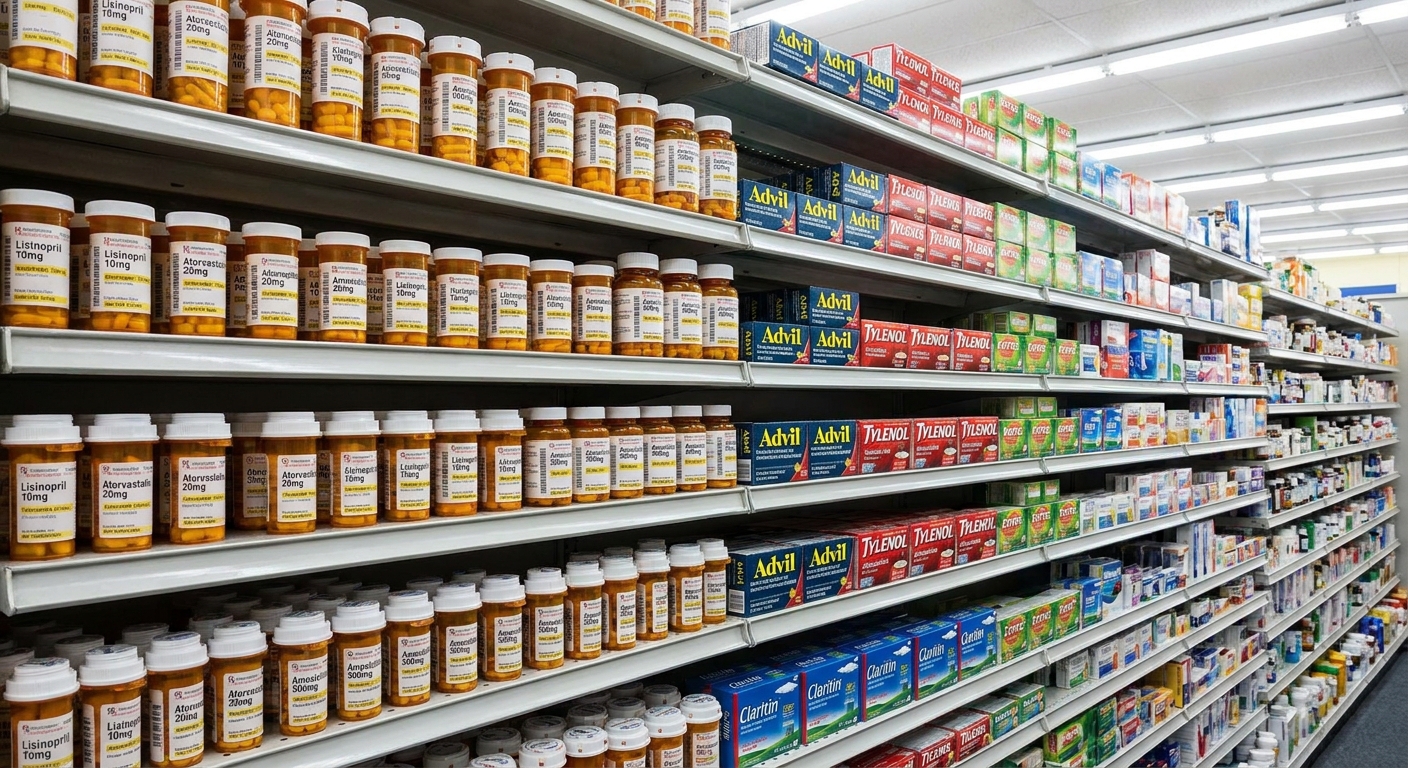
Inventory management is what the pharmacy does inside its four walls: ordering, receiving, storing, tracking, rotating, counting, and documenting.
Supply chain is the larger path medication takes to reach you: manufacturer to wholesaler to pharmacy, plus the systems that keep it safe and traceable.
On the exam, these two blur together. A question might be labeled “inventory,” but it is really checking whether you understand procurement, storage requirements, documentation, and what to do when something goes wrong.
Inventory turnover (and why it matters)
Inventory turnover is how quickly stock is used and replaced over a period of time. High turnover usually means the product is moving and you are not sitting on excess. Low turnover often means you are tying up money in slow movers, increasing expiration risk, and crowding your shelves.
How turnover is commonly tested
- Conceptual: “Which pharmacy has better turnover?” or “What does low turnover suggest?”
- Risk-based: “What inventory problem increases expired meds?” (Often overstocking and low turnover.)
- Workflow: “What should you do when a drug is frequently expiring?” (Lower the max level, reduce order quantities, or review ordering habits.)
Exam-day shortcut
If you are unsure, anchor yourself to this: turnover is about balancing availability and waste. Low turnover increases waste and expirations. Extremely high turnover without enough safety stock (or with long lead times and frequent backorders) can raise stockout risk.
Par levels (min/max) and reorder points
Par level is the target amount you try to keep on hand. Many pharmacies use a min/max approach:
- Minimum (reorder point): when you hit this number, you order.
- Maximum: the top amount you want after ordering and receiving.
Some systems automatically generate an order when the on-hand quantity drops to the reorder point. Others use manual review, especially for controlled substances, refrigerated items, and expensive specialty meds.
What min/max is trying to prevent
- Stockouts (patient care and service issues)
- Overstock (expired meds, wasted budget, clutter)
- Emergency orders (often cost more and disrupt workflow)
Common exam scenario
You see “Drug A has a minimum of 2 bottles and a maximum of 6. You currently have 1 bottle on hand.” The test is checking that you recognize you are below the reorder point and should reorder according to policy to get back toward the normal max level.
If you want extra practice with calculation style questions, pair this topic with pharmacy math and conversions so you are comfortable with units, package sizes, and day supply logic.
Receiving and put-away basics
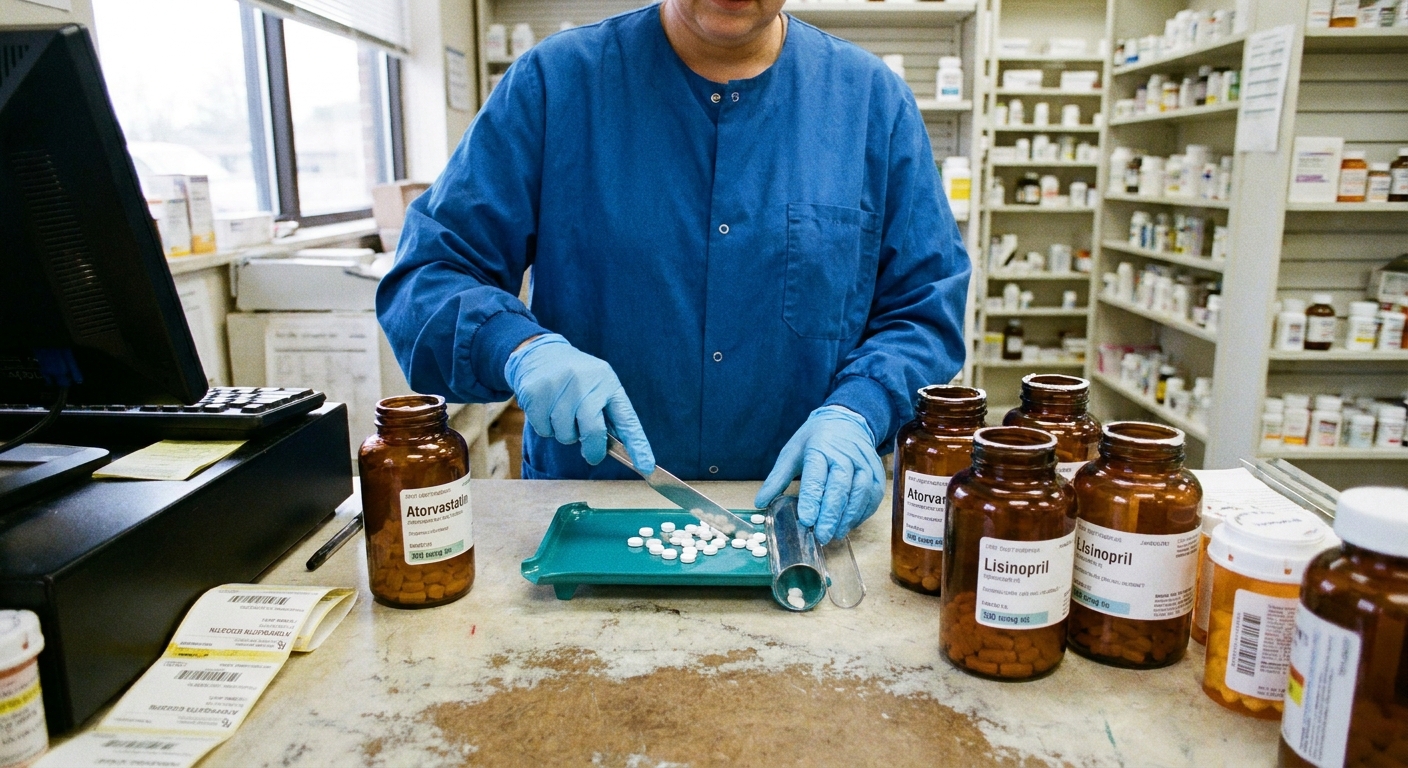
Receiving is an easy place for exam writers to hide safety checks because it feels “administrative,” but it has real consequences.
- Match product to the order: confirm drug name, strength, dosage form, and quantity (and use the NDC if the question gives it).
- Check packaging: look for damage, broken seals, or signs of a temperature problem on arrival.
- Prioritize cold chain items: refrigerated meds get put away first.
- Date and rotate: rotate stock so the soonest-to-expire product is used first.
Exam mindset: if something arrives damaged, questionable, or wrong, you do not “make it work.” You set it aside and escalate it per policy.
Ordering basics: C-II vs non-controlled
In a real pharmacy, not everything is ordered the same way. The exam likes to check whether you understand that controlled substances have tighter rules and documentation.
Typical split you should recognize
- Non-controlled medications: usually ordered through a wholesaler portal, regular delivery schedules, and standard receiving procedures.
- Schedule II (C-II): requires a DEA-compliant ordering process and stricter receiving, storage, and recordkeeping. The exact workflow depends on the setting and state, but the exam expects you to treat C-II as “highest control and documentation.”
For exam purposes, do not invent a procedure. Focus on the general principles: limited access, accurate logs, secure storage, and documented receipt.
If you want a tighter exam-focused review of what is fair game, my guide on pharmacy law and ethics is the best companion to this inventory section.
Formularies: what they are and what techs do
A formulary is a list of medications that are preferred or approved for use by a plan or facility.
- Insurance formulary: drives coverage, preferred brands, and prior authorization requirements.
- Hospital or health system formulary: limits what is stocked and what prescribers can order routinely.
How formularies connect to inventory
Formularies shape what a pharmacy keeps on the shelf. If an item is rarely covered or rarely used, it may be non-formulary or treated as “order as needed.” In hospitals, formulary decisions often tie directly to purchasing contracts and therapeutic interchange policies.
What you may be asked on the exam
- Identify a formulary’s purpose: standardize therapy, control cost, improve safety.
- Differentiate formulary vs non-formulary: non-formulary often requires approval, substitution, or special ordering.
- Recognize that techs do not make clinical decisions: they follow facility policy and alert the pharmacist when something falls outside the formulary process.
Expiration dating and storage
Inventory questions love expiration dates because it is a clean way to test safety basics.
Rotation (FEFO)
Most pharmacies rotate stock using a “soonest expiration first” approach. You might hear it called FEFO (first-expire, first-out) or just “FIFO” in everyday pharmacy talk, but the goal is the same: use the items that expire sooner before the newer, longer-dated stock. This reduces waste and lowers the chance an expired bottle sits hidden behind newer inventory.
Manufacturer expiration vs BUD
Another exam favorite is the difference between a manufacturer’s expiration date and a beyond-use date (BUD). If something is repackaged, compounded, or otherwise prepared in the pharmacy, the BUD can be shorter than the original expiration date. On test questions, follow the label and policy, and when in doubt, defer to the pharmacist.
Storage conditions show up in subtle ways
- Refrigerated items: require cold chain handling and quick put-away on receiving.
- Light-sensitive meds: stored per label and policy.
- Hazardous drugs: may have special storage and handling procedures.
When in doubt, exam logic is straightforward: store meds according to labeling and policy, separate high-risk items appropriately, and minimize exposure to heat, light, and moisture.
Recalls: the exam-ready workflow
Recalls are one of those topics where the test is really checking behavior: can you act quickly, protect patients, and document correctly.
Key recall vocabulary
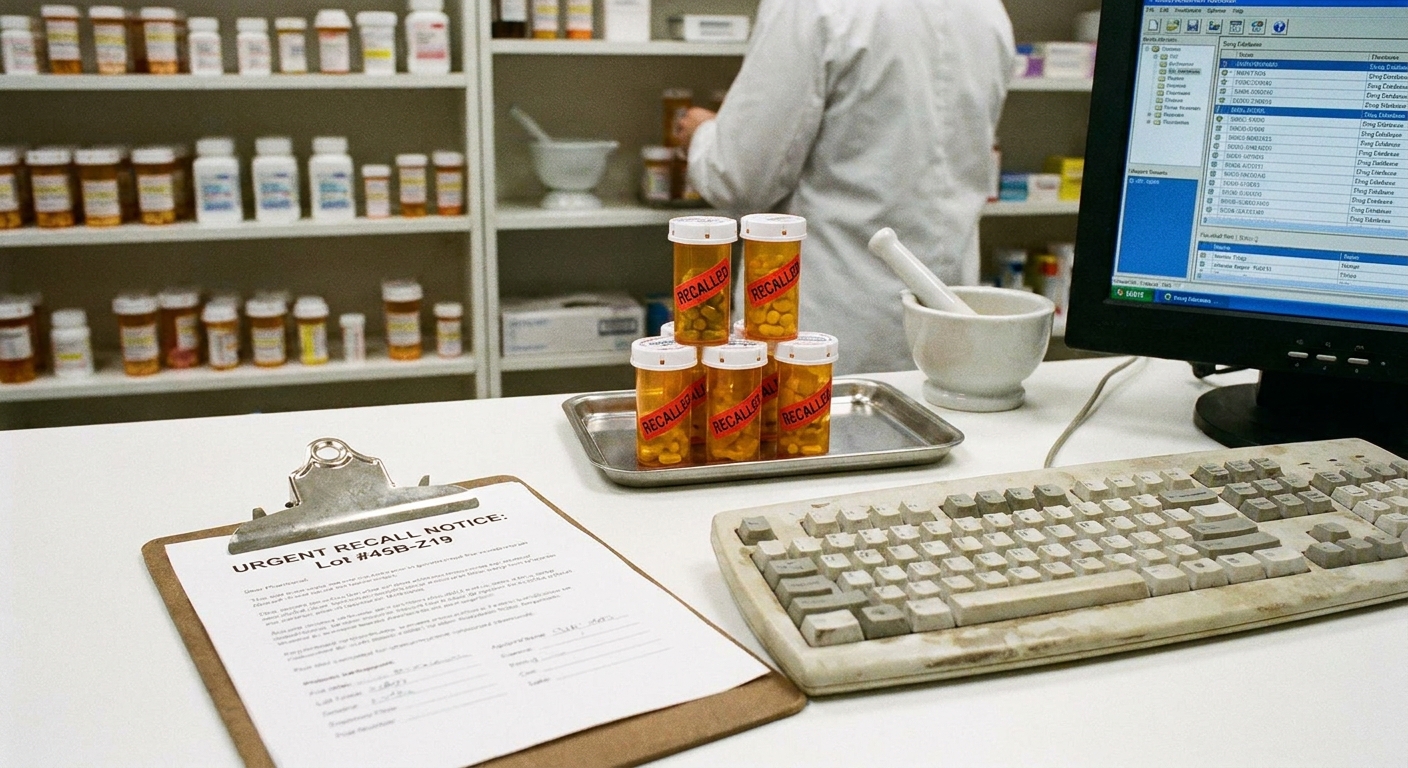
- Recall: a product is being removed or corrected because it may be defective or harmful.
- Lot number: the identifier used to match affected product.
- Quarantine: physically separate the product so it cannot be dispensed.
- Return channel: sending product back through the method specified in the recall notice (often the wholesaler or manufacturer, and sometimes an approved reverse distributor depending on the product and program).
A simple recall procedure you can memorize
- Identify the recalled item (drug name, strength, dosage form, NDC if provided, and especially the lot number).
- Locate inventory in all possible places: shelves, will-call bins, fridge, automated dispensing areas, and returns.
- Quarantine immediately in the designated area, clearly separated from active stock.
- Stop dispensing the affected lot and notify the pharmacist per policy.
- Document actions (quantities pulled, lot numbers, dates, and who completed the task).
- Return or dispose following the recall instructions and pharmacy policy.
If a question asks “What is the first thing you do?” the safest exam answer is usually some version of remove the affected product from available stock and quarantine it, then notify the pharmacist and follow the documented recall process.
Common mix-ups: returns, recalls, expired meds
These sound similar, and the exam sometimes tests whether you can separate them.
- Recall: product is pulled because of a safety or quality issue tied to a lot or item. It triggers a formal process.
- Expired medication: removed from active stock as part of routine inventory management. It is not a recall, but it still requires proper disposal procedures and documentation per policy.
- Return to stock: depends on policy and product integrity. Many settings restrict what can be returned to stock, especially if it has left secure control or been stored improperly.
When a scenario feels tricky, focus on patient safety and product integrity. The exam tends to reward the choice that prevents a questionable medication from being dispensed.
Shortages and backorders
Shortages show up on exams as workflow questions: “What should you do next?” Tech-safe actions typically look like this:
- Confirm availability: check on-hand counts and incoming orders.
- Check timing: look for an estimated time of arrival if your system provides it.
- Follow escalation policy: alert the pharmacist so they can decide on substitution options, partial fills, or contacting the prescriber when appropriate.
- Use approved ordering options: some pharmacies can use secondary wholesalers or different package sizes, but only if policy allows.
Exam mindset: techs support the process, and the pharmacist makes clinical and therapeutic decisions.
Inventory counts: perpetual vs physical
You will see two basic tracking approaches:
- Perpetual inventory: running on-hand count updated with each receipt and dispensing event (commonly emphasized for controlled substances).
- Physical inventory: an actual count done at scheduled times to verify what the system says.
On exam questions, if there is a discrepancy between a perpetual count and what is on the shelf, the correct mindset is: do not “fix” it quietly. Follow policy, notify the pharmacist, and document corrections appropriately.
Mini quiz: quick checks
1) What does low inventory turnover often suggest?
Too much inventory sitting too long, which increases expiration risk and ties up budget.
2) What is a par level used for?
To keep stock available without overstocking, using a target quantity and a reorder point.
3) In a recall, what is your first priority?
Locate affected product and quarantine it so it cannot be dispensed, then notify the pharmacist and document.
4) What is a formulary?
A list of preferred or approved medications for a plan or facility that guides what is stocked and covered.
How I would study this (fast and calm)
If inventory feels like a pile of random terms, study it like a workflow instead:
- Ordering: min/max, reorder points, ordering cycles.
- Receiving: verifying the right product, storing correctly, securing controlled items.
- Maintaining: rotation, expiration checks, inventory counts.
- Fixing problems: shortages, substitutions per policy, recalls and quarantines.
Then do a handful of practice questions and mark the ones you missed by “step” (ordering vs receiving vs maintaining vs fixing). That simple organization trick is how I used to train new hires, and it helps your brain retrieve the right rule under pressure.
For a broader plan that pulls all exam topics into one structure, start with my pharmacy tech exam guide and then use practice tests to find your weak spots to target what needs another pass.