
The first time I heard the words working interview in a community pharmacy, I pictured an awkward half shift where I would be silently judged for eight hours straight.
The reality is usually simpler and more useful: a working interview is a short, supervised look at how you move in a real pharmacy. It is partly about whether you can follow directions and stay calm under pressure. It is also your chance to figure out whether the pharmacy is the kind of place where you can learn without getting thrown to the wolves.

What a working interview is (and what it is not)
Most working interviews fall into one of these formats:
- Shadow-only (common for new hires): you observe, ask questions at appropriate times, and maybe practice a small, non-sensitive task with permission (like facing shelves, stocking vials, or organizing bags at the will-call area).
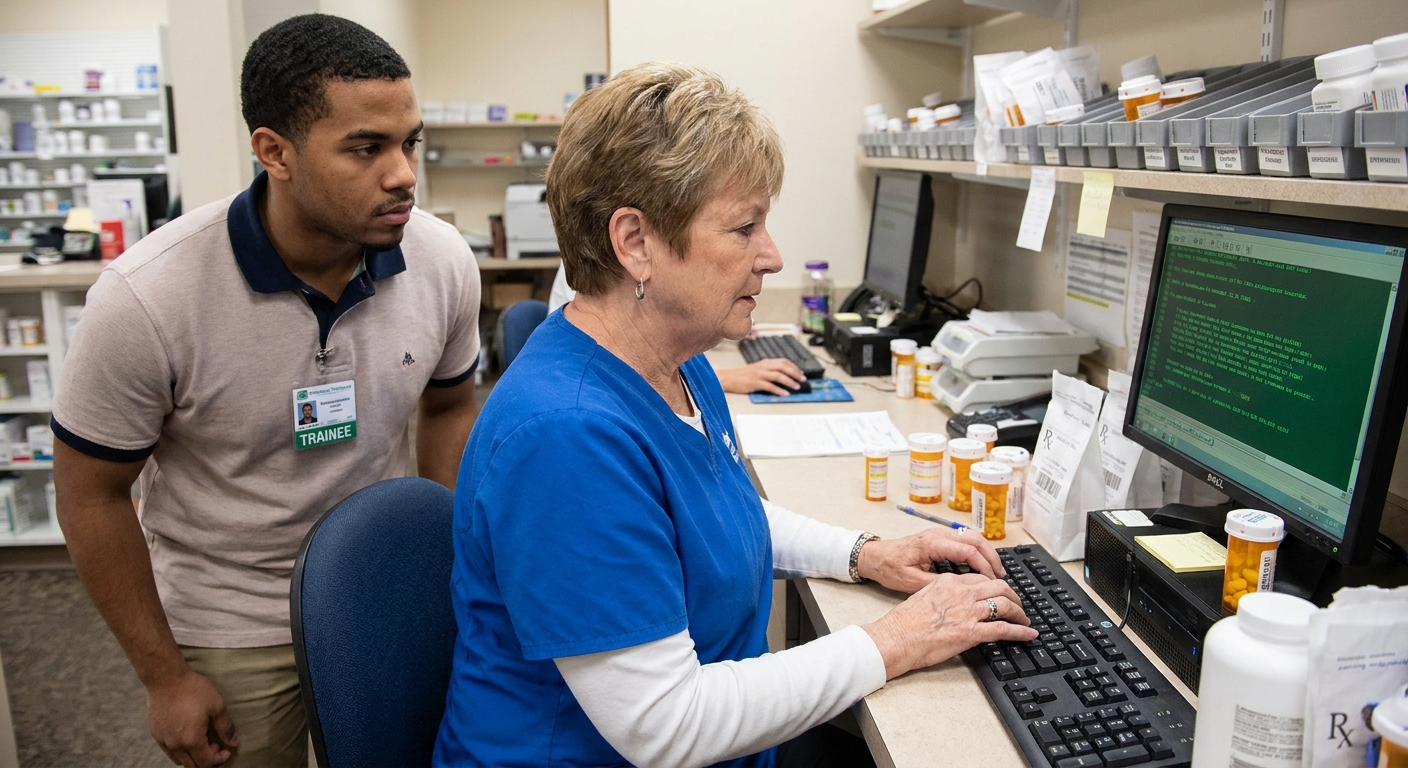
- Guided participation: you help with basic workflow tasks while a tech or pharmacist watches closely.
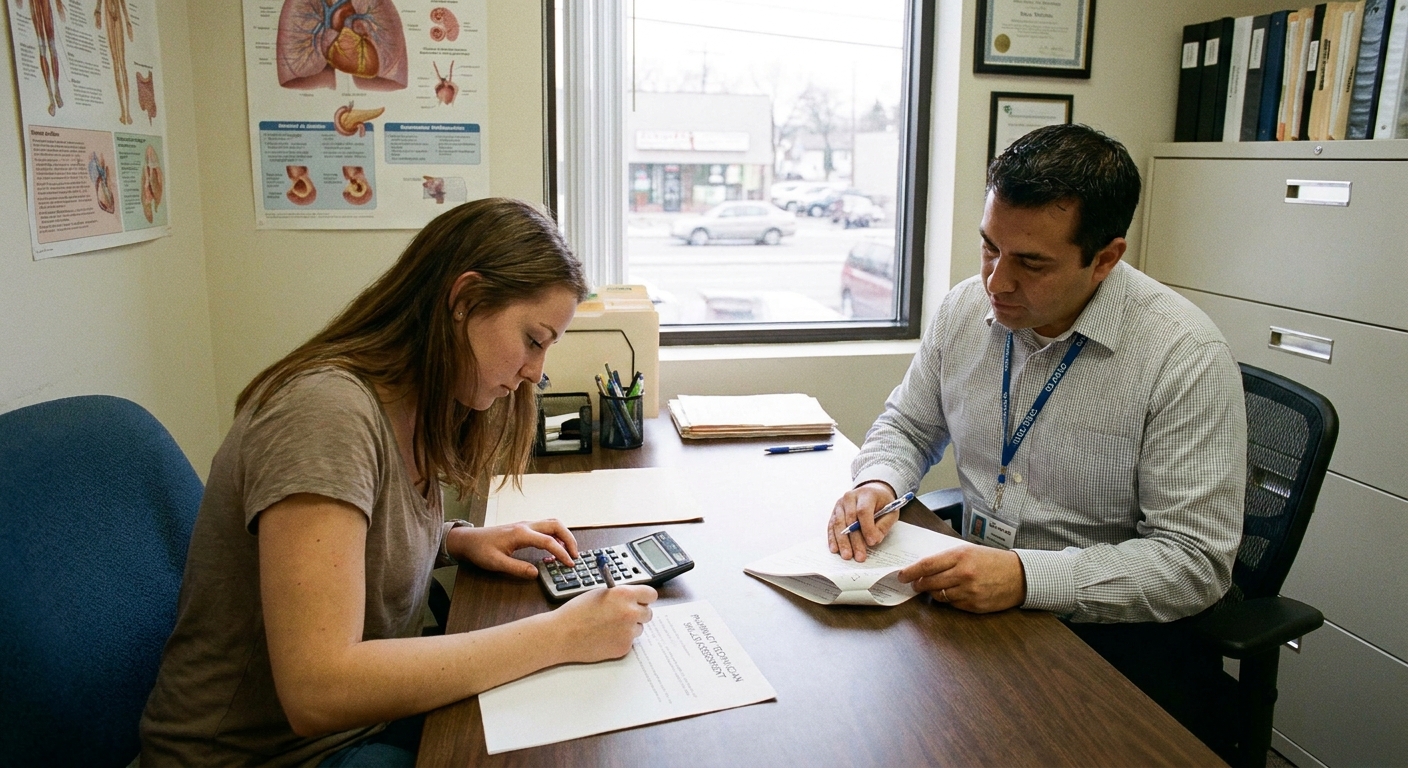
- Skills check: you are asked to demonstrate specific basics (data entry navigation, phone etiquette, counting technique), usually in a controlled way.
What it is not: a license to do unsupervised technician work, handle controlled substances without authorization, or jump into patient-specific steps if you are not trained and cleared to do so in that setting.
Also, policies vary by employer and state. Confirm ahead of time whether the shift is paid and what you are permitted to do under supervision.
If you are unsure what you are allowed to touch, treat that uncertainty as a safety win. In pharmacy, pausing to confirm beats guessing every time.
Before you walk in: set yourself up to look steady
Confirm the basics the day before
- Start time and length: “Just confirming I should arrive at 9:45 for a 10:00 to 2:00 working interview.”
- Where to check in: front counter, consultation window, staff entrance.
- Dress code: scrubs vs business casual. If they do not specify, business casual is typically safe.
- What to bring: photo ID, any requested documents, and a small notebook.
Confirm access and paperwork
It is completely normal for a pharmacy to have a few “before you step behind the counter” requirements. Ask, plainly:
- “Will I need to sign a confidentiality or HIPAA form before I shadow?”
- “Do you need any paperwork completed before I’m in the pharmacy area?”
- “Will I be observing only, or will I be doing any hands-on tasks?”
What to wear (simple, clean, functional)
Pick something you can move in. Avoid anything that catches on drawers or looks messy after an hour.
- Closed-toe shoes with good grip
- Minimal jewelry
- Hair secured back if long
- Watch is helpful for pacing, but silence all notifications
Bring a “tiny toolkit”
- Small notebook and pen
- A short list of questions you want to ask
- Water bottle (leave it in the break area if allowed)
If you want a broader prep plan, I keep a hub of interview resources here: Job Interview Tips.
The first 5 minutes: the working interview is already happening
I used to tell new clerks: in pharmacy, the first impression is usually built before you touch a single prescription. It is built on how you enter the environment.
Do these things early
- Introduce yourself to everyone you meet with a clear name and purpose.
- Ask who you should follow and where you should stand when it is busy.
- Ask about safety basics: “Where should I wash my hands?” “Is there a spot you prefer me to keep my notebook?”
- Mirror the tone of the pharmacy. Calm, respectful, and ready to learn beats overly chatty.
Use this one sentence to reduce awkwardness
“I’m excited to learn your workflow. If there’s a preferred way you like things done here, please tell me and I’ll follow it.”
That line signals coachability, which is gold in a real pharmacy.
How to interact with staff without getting in the way
A working interview is a balancing act. You want to be visible, but not disruptive.
Be “helpfully present”
- Stay near your point person so they can redirect you quickly.
- Keep your hands neutral unless invited to jump in. In high-volume stores, it is easy to look eager and accidentally create a safety issue.
- Ask questions in batches when there is a natural pause, not while someone is verifying or counseling.
Respect roles and pressure points
Pharmacists often have hard stops: verification queues, immunizations, consults, controlled substance checks. Senior techs may be juggling phones, insurance, and the fill line all at once. Your job is to reduce friction.
Protect privacy while you shadow
Even if nobody says it out loud, assume privacy is being evaluated.
- Do not photograph screens, labels, or bins.
- Do not write patient-identifying info in your notebook.
- Step away from counseling windows unless invited to listen.
If you want to sharpen the people side of this, it pairs nicely with 5 Essential Soft Skills Every Pharmacy Technician Needs.
What you can do to show baseline competence (even as a beginner)
You do not have to be fast. You have to be safe, teachable, and aware.
1) Follow the chain of command
When you are unsure, you do not ask the nearest person at random. Ask your assigned trainer or pharmacist. That shows you understand accountability.
2) Speak clearly on the phone (or during a mock call)
If they let you practice phone etiquette, keep it simple:
- Greeting
- Pharmacy name
- Your name
- How you can help
- Repeat key details back
If you are asked for something you cannot access, say so directly: “I’m shadowing today. Let me get the technician who can help.”
3) Demonstrate tidy workstation habits
In my old stores, the people who lasted were the ones who respected the space:
- Return items to where they belong
- Do not set personal items on the counter
- Do not leave loose paper with patient info exposed
4) Show you understand accuracy over speed
A great phrase when you are learning a task:
“I can do that. I’m going to go slowly the first time so I do it correctly. Can you watch my first one?”
5) Use pharmacy language carefully
If you know the term, use it. If you do not, do not bluff. It is completely fine to say, “I have seen that abbreviation in studying, but can you tell me how your team prefers to interpret it here?”
If you are brushing up on the core language, review SIG Codes and Medical Abbreviations.
Common working interview tests and how to handle them
“Here’s a label. Tell me what it says.”
They may be checking whether you can read a sig safely, spot key pieces, and say them out loud without guessing.
- Identify drug name, strength, dosage form
- Read the directions slowly
- Confirm quantity and refills
- If anything is unclear, say what you would verify
“What would you do if a patient is angry?”
They are listening for calm, boundaries, and escalation to the right person. A solid approach:
- Listen without interrupting
- Acknowledge emotion
- State what you can do next
- Bring in the pharmacist or lead tech when needed
To structure your answer like an experienced candidate, see STAR Method for Pharmacy Tech Interviews.
“Can you do some pharmacy math?”
Sometimes it is informal. Sometimes it is a quick conversion or a days' supply scenario. If you want to feel steadier before any interview, my go-to refresher is Pharmacy Math and Conversions.
“Show me how you would count.”
If they hand you a counting tray, they want safe habits:
- One common habit is keeping the bottle label facing you to reduce mix-ups
- Count deliberately
- Keep tablets contained (no stray tablets on the counter)
- Clean up properly
“Can you help with controlled meds?”
Be careful here. In many pharmacies, even touching controlled stock can be restricted by policy, state rules, and your registration or hiring status. A safe answer is:
“I’m happy to help if it’s allowed. What tasks are you comfortable with me doing today under your supervision?”
Questions you should ask during the shadow shift (to assess fit)
A working interview is also you interviewing them. You are trying to answer: Will I be trained well here? and Will I be safe here?
Ask workflow and training questions
- “How do you train new technicians during the first 30 days?”
- “Who would I go to first with questions on a shift?”
- “What does a successful new hire do by week two?”
This ties in well with what to expect early on: Your First 30 Days as a New Pharmacy Technician.
Ask about scheduling realities
- “What are your busiest days and times?”
- “How far in advance do schedules come out?”
- “Are closing shifts and weekends shared evenly?”
Ask safety and quality questions
- “How do you handle medication error reporting and prevention?”
- “What double checks do technicians do here versus what the pharmacist does?”
- “What’s the process when something looks off on a prescription?”
If you want to study the mindset behind these systems, I wrote a guide on Medication Error Prevention Q&A Strategies.
Ask about growth
- “Do techs here cross-train into inventory, immunization support, or specialty areas?”
- “Do you have lead tech roles or paths to hospital pharmacy?”
If you are thinking ahead, explore Pharmacy Technician Specialties.
Red flags I would not ignore
Some pharmacies are just busy. Some are chaotic in a way that will burn you out fast. During a working interview, watch for patterns like:
- No one can tell you who is training you, and you get passed around all shift.
- Staff talk badly about patients or each other in front of you.
- Shortcuts are normalized, especially around pharmacist-only steps or controlled substances.
- You are pressured to do tasks you are not trained or authorized to do.
- The vibe is “figure it out” with no structure for new hires.
If you see one red flag, it might be a rough day. If you see several, believe what you are seeing.
What to do if you make a mistake
If you fumble something small, do not try to quietly fix it and hope nobody noticed. The safest move is also the most professional one:
- Stop the task
- Say it out loud
- Let your trainer or the pharmacist decide the next step
A simple line that works: “I think I may have made an error. Can you take a look before I go any further?”
How to finish strong
Do a quick end-of-shift recap
Before you leave, ask for 60 seconds with the manager, pharmacist, or lead tech:
- Thank them for the time
- Name 1 or 2 things you learned
- Ask what the next step is and timeline
Example:
“Thanks for letting me shadow today. I learned a lot about how your team handles drop-off and third-party issues. Is there anything you would like me to review or improve before the next step?”
Send a short thank you message
If you have an email contact, keep it simple and specific. Mention something real you observed and why you are interested.
Quick working interview checklist
- Arrive 10 to 15 minutes early
- Dress for movement and professionalism
- Confirm if the working interview is paid and what you are allowed to do
- Bring notebook, but protect patient privacy
- Stay close to your assigned trainer
- Ask before touching anything patient-specific
- Choose accuracy over speed
- If you make a mistake, stop and speak up immediately
- Ask training and safety questions to assess fit
- Close with a recap and next steps